Are you aged between 5-18 years, live in Thurrock/Grays/London and surrounding areas and love to write?
Our poetry competition is open! Free entry! And the winner get’s their poem published officially on ThurrockMuslims.com! One entry per person.
The theme is “World peace”.
What are you waiting for! Get writing!
Deadline for submissions is 31 August 2024
(Parent/guardian email address and contact required for under 18s. Thurrockmuslims.com bares no responsibility for any failure to comply with our age limit protective clauses. More disclaimer/about)
Contact
Welcome to ThurrockMuslims.com poetry competition!
Are you aged between 5-18 years, live in Thurrock/Grays/London and surrounding areas and love to write? (Parent/guardian email address and contact required for under 18s. Thurrockmuslims.com bares no responsibility for any failure to comply with our age limit protective clauses. More disclaimer/about)
Our poetry competition is open! Free entry! And the winner get’s their poem published officially on ThurrockMuslims.com! One entry per person.
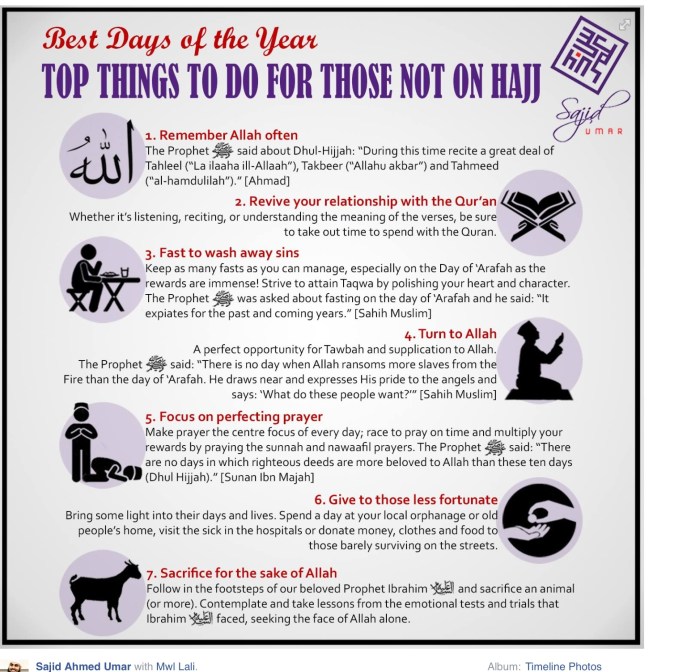
Reciting Takbeer: Let us not forget to make the Takbeer following the obligatory prayers, starting after Fajr on Arafat day, till when the sun sets on the 13th of Dhul Hijjah. (see below for details).
‘It is Sunnah to recite takbeer at any time during the first ten days of Dhu’l-Hijjah and all the days of Tashreeq, starting from the beginning of the month of Dhu’l-Hijjah (i.e., from sunset on the last day of Dhu’l-Qa’dah) until the end of the days of al-Tashreeq, which is when the sun sets on the thirteenth day of Dhu’l-Hijjah).
With regard to at certain times, it starts from Fajr on the day of ‘Arafah and lasts until the sun sets on the last day of the days of Tashreeq, in addition to the takbeer that may be recited at any time. So when a person says the tasleem at the end of the obligatory prayer, he should pray for forgiveness (by saying Astaghfir-Allaah) three times, and say, “Allaahumma anta al-salaam wa minka al-salaam, tabaarakta yaa dhaa’l-jalaali wa’l-ikraam (“O Allaah, You are al-Salaam [the One Who is free from all defects and deficiencies), and from You is all peace, blessed are You, O possessor of majesty and honour)”, then start the takbeer.
{Takbeer: Allaahu akbar, Allaahu akbar, laa ilaaha ill-Allaah, Allaahu akbar, Allaahu akbar, wa lillaahi’l-hamd(Allaah is Most Great, Allaah is Most Great, there is no god but Allaah, Allaah is Most Great, Allaah is Most Great, and to Allaah be praise). }
This is for those who are not on Hajj. The pilgrims should start the takbeer recited after prayer from Zuhr on the Day of Sacrifice (the 10th of Dhu’l-Hijjah).
And Allaah knows best.
See Majmoo’ Fataawa Ibn Baaz (may Allaah have mercy on him), 13/17; al-Sharh al-Mumti’ by Ibn ‘Uthaymeen (may Allaah have mercy on him), 5/220-224.’ [see http://islamqa.info/en/36627]
Alhamdulillah. May Allah have mercy on us all and forgive us,guide us and grant us jannat-al-firdaus, wasallallahu ala nabiyinaa Muhammad sallallahu alayhi wasallam! ameen.
The sacred month of Dhul Qi’dah is due and we would like to remind ourselves about the importance of the four sacred months in Islam. Dhul Qi’dah is the 11th month of the Islamic calendar. The sacred months are Rajab, Dhul Qid’ah, Dhul Hijjah and Muharram, the 7th, 11th, 12th and 1st month of the Islamic Hijri calander respectively. (see Surah Tawbah, Qur’an chapter 9 verse 36). We should also prepare for the Hajj season, and endeavour to perform our obligatory Hajj for the sake of Allah, as soon as we have the means/ability.
(We should be extra careful not to sin, all the time, but particularly in the sacred months, and avoid aggression)
May Allah forgive us, be merciful to us and guide us, for He is the Most Gracious the Most Merciful, The Ever-Relenting. May Allah guide and forgive us and enable us to witness and observe many Hajj and Umrah in His obedience, with sincerity and strength and excellence. May Allah unite us in jannat al firdaus. Allah bless His final messenger Muhammad ibn Abdillah in abundance. Amin
EID PRAYER GRAYS THURROCK UPDATE: Eid-ul-Fitr 1445/2024 10th April 2024- TALEEM MOSQUE , GRAYS MOSQUE, Thurrock, Tilbury, C100, Basildon, Stanford Le Hope, Purfleet, Lakeside Centre, MEN and WOMEN invited & Children-
Asalamu alaykum.
By His Mercy, Allah (The Most Generous Al-Kareem) has gifted us with the festival of Eid-ul-Fitr following a month of fasting in obedience to His command, Exalted and Majestic is He. Subhanallah
It is with great joy that we announce that the first day of Shawwal will be 10 April 2024 which in sha Allah will console us for the departure of Ramadan- The Month of Mercy.
May Allah accept (good deeds) from us and from you. ameen
Taqabbal Allahu minnaa wa minkum
ANNOUNCEMENT- LOCAL EID PRAYER ARRANGEMENTS BELOW**
EID PRAYER AT TALEEM MASJID, THURROCK, GRAYS TOWN CENTRE, 21 CLARENCE ROAD RM17 6QA– MEN, WOMEN, KIDS WELCOME
Arrival at 630am , 730AM & 830am & 930am & 1030am – 5 jamat. MEN AND WOMEN AND KIDS
*Eid Prayers Times at Taleem Mosque*
Eid Ul-Fitr will be tomorrow Wednesday 10th April 2024.
Let us work hard to maintain TAQWA of Allah and try our hardest not to undo all the good we done in Ramadan! Remember Ramadan is training for the year round, so we remind ourselves to keep onto the good habits of fasting and prayers including night prayer. Allah grant us tawfiq and jannat al firdaus! May Allah bless our beloved Rasool Muhammad peace be upon him, amin!
Some top tips (see above links for references from Qur’an and sunnah):
1- Make sure you’ve paid zakat-ul-fitr, before the Eid salat.
2- Keep pronouncing the takbeer (starts on night of Eid until the imam emerges to lead the Eid prayer.) The Takbeer is:
(Allah is Most Great, Allah is Most Great, Allah is Most Great, There is no true god worthy of worship, except Allah. Allah is Most Great, Allah is Most Great, Allah is Most Great and all praise be to Allah.)
3-Have ghusl in the morning before going out to pray
4- Ensure you have eaten something before the prayer of Eid-ul-Fitr. Try eating an odd number of dates, as the prophet Muhammad sallallahu alayhi wasallam did.
5- Men should go out wearing their finest clothes, perfume etc.When going out or in the presence of non-mahram men, women should avoid perfume. Women can wear their fine clothes so long as it is concealed by a full and complete, unadorned Hijab. When in female only environments, or among their mahram relatives, women may adorn themselves appropriately. My dear readers, let us remind ourselves that obedience to Allah takes precedence over all else. We have just fasted Ramadan to gain Taqwa, let us keep working on it for Allah alone!
6- Pray the Eid prayer in congregation
7- Congratulate one another! Taqabbal Allahu minnaa wa minkum (May Allah accept (the fast and worship) from us and from you)
8- Go out to pray one route, and return by another.
Check out the links above for more!
May Allah subhanahu wa ta’alaa grant us mercy from Him in this world and the next, may He accept our good deeds, expiate our sins and make us adhere to the Qur’an and sunnah of the beloved messenger Muhammad peace be upon him. May Allah unite us in jannat al firdaus. May Allah abundantly bless His final prophet Muhammad upon him be peace. ameen!
Remember us in your duas too in sha Allah!
MAY ALLAH HELP US REMEMBER HIM ALWAYS AND REMIND EACH OTHER, ALLAHUMMA SALLI ALAA MUHAMMAD! AMIN
In the name of Allah, the Beneficent, the Merciful
Verily, We have sent it (this Qur’ân) down in the night of Al-Qadr (Decree)[] (1) And what will make you know what the night of Al-Qadr (Decree) is? (2) The night of Al-Qadr (Decree) is better than a thousand months (i.e. worshipping Allâh in that night is better than worshipping Him a thousand months, i.e. 83 years and 4 months) (3) Therein descend the angels and the Rûh [Jibril (Gabriel)] by Allâh’s Permission with all Decrees, (4) (All that night), there is Peace (and Goodness from Allâh to His believing slaves) until the appearance of dawn.[] (5)
And if you are a lady on your menses, you can ibadah other than prayer: see this
Some reminders from our respected lecturers in the Ramadan Revival, this night, increase in Qiyam (standing in prayer at night), reading Qur’an, making dua- lots of it, pour our hearts out to Allah! We can also give zakah if one lunar year passed on the wealth which reached the nisaab, and do other good deeds, like istighfar (seeking forgiveness from Allah –click to see amazing this dua) sadaqah, reminding each other of Allah, dhikr- remembering Allah, salat and salam on rasoolullah sallallahu alayhi wasallam!
It was narrated from Abu Hurayrah (may Allaah be pleased with him) that the Prophet (peace and blessings of Allaah be upon him) said: “Whoever stays up and prays on Laylat al-Qadr out of faith and in the hope of reward, his previous sins will be forgiven.” Agreed upon.
Rasoolullah sallallahu alayhi wasallam taught ‘Aisha radi Allahu anhaa what to say on laylat-ul-qadr:
Let’s revive the sunnah and flee to Allah! please remember us in your duas, and like and share this in sha Allah!
NOTE: Congregational prayers are being held around Thurrock and Grays, don’t miss out!
Isha and taraweeh prayers:
Taleem Masjid has facilities for men, women and children (families welcome). Special guest Sheikh Qari Ayman from Egypt (21 Clarence Road, next to Job Centre, Grays, RM17 6QA)
(Wudu/ablution facilities available at Taleem Masjid, and parking in secure car park, arrive earlier)
Grays mosque has facilities for men and boys, and now women. (in Grays Park, Grays)
Basildon has prayer facilities for families: organised by South Essex Islamic Trust
Stanford le-Hope and Tilbury masjids also have jamaat.
Arrive with wudu (facilities available) and make sure you park responsibly 🙂 (let’s be better neighbours in sha Allah).
Special note: Taleem Masjid is offering daily prayers, jumuah, taraweeh with Sheikh Qari Ayman of Egypt, daily iftar for brothers, weekly sister’s iftars and special community iftar, programmes for women throughout this blessed month, plus tons of Islamic seminars and community events year round. This Masjid is truly fulfilling its purpose of uniting the community in Allah’s cause, and the growing congregation testifies to its benefit.
Prominent shuyukh countrywide are supporting this excellent effort and proudly advocate for Taleem Masjid.
Here’s a message from East London Mosque respected Imam Muzzamil Ahmed.
Here’s a message from respected Shaikh Kazi Ashiqur Rahman.
Please donate generously for Taleem Masjid urgent appeal! Let’s build Masjids upon Tawhid and Qur’an and Sunnah in our town and beyond. May Allah help us spend sincerely in His cause and help us purchase Taleem Masjid swiftly and make it our sadaqah jariyah for generations to come.
May Allah grant us sincerity, and success and jannat al firdaus, May Allah guide and have mercy on us, forgive all of us who believe and admit us to paradise, by His mercy. Allah abundantly bless rasoollullah. Ameen
In short, Easter is a Christian festival with remnants of Pagan traditions. Christians celebrate the alleged crucifixion and resurrection of Jesus, this is the essence of Easter. The holiday has become rather commercial, with increase in sales of confectionary, chocolate and popular toys. (1)
Christians believe in the Trinity (father,son, holy spirit), which essentially means that they direct their worship to God, Jesus and the Holy spirit. So today, Christianity has polytheistic dimensions and is not a faith of complete monotheism.
Easter and Islam
Islam is absolutely Monotheistic. Muslims worship One God alone (Allah), without rivals. The Islamic narrative about prophet Jesus (peace be upon him) is simple. Jesus is not the son of God (as mentioned above, Christianity purports him to be). Muslims believe that God (Allah) is The Supreme Creator of all, The Self-Sufficient Master, He does not have children or a wife, and He does not need these things. It makes perfect sense, we are servants of The One Supreme Master- Allah. We go to Allah for all our needs, we don’t need any intermediaries! We need Allah, but Allah does not need us. That is the truth. And the truth makes sense.
We believe Jesus (‘Eesa) (peace be upon him) was a mighty prophet of God (Allah), born from the virgin Mary, who was pure and chaste. God does not need children. It’s the creation, humans and animals who need children. If God can create Adam without a father and mother, Eve without a mother, than surely it is easy for God to create Jesus without a father. Jesus’ story is mentioned in detail in Chapter 19 of the Qur’an, called ‘Maryam’.
If you remember the Christmas post a few months back and a few other blogs on Islam Explained, you’ll remember that as Muslims, we MUST believe in Jesus in order for our faith to be complete. Jesus never claimed divinity. Rather, Jesus peace be upon him was a messenger and prophet of Allah.
Jesus was not crucified, rather Allah (The One True God) took Jesus up to Him, while he was still alive, and another man was made to resemble Jesus and that man was killed. Jesus will return to earth, under Allah’s command, during the end times to fight the Anti-Christ (The Dajjal).(2)
Conclusion- Why Muslims don’t celebrate Easter
The Islamic narrative on monotheism and beliefs about Jesus are so markedly different to the Christian narrative. Thus, it’s no surprise Muslims do not commemorate a Crucifixion and resurrection of Jesus, as these didn’t happen in the first place!
Incidentally, there are various members of society and other faiths who do not partake in such festivals either, each with their own reasoning.
Be wise and kind, there’s no need to offend or be offended. Let your peers know gently and respectfully, it’s not the diet that makes you turn down their chocolate treats, it’s your freedom of personal choice and more importantly, your religious belief which you must hold onto with integrity, because a Muslim must be truthful, first and foremost to Allah. Being truthful in word and deed is important in Islam.
Islamic monotheism is our focus, we worship Allah alone.
Just as we cannot force others to believe, we cannot be forced to disbelieve.
The truth is apparent, falsehood is apparent. May Allah guide us all to the truth. Amin.
Let’s fulfil the 3rd pillar of Islam: ZAKAT, obligatory charity tax.
Zakat or Zakaah/Zakah, means purification or growth.
In Islam, it is paying 2.5% of all your wealth (if it reaches the nisaab/thresholdat which you become eligible to pay Zakat) to those who are entitled to receive Zakat, including the poor and needy, in obedience to Allah. Charity is an integral teaching in our faith.
DID YOU KNOW? Zakat is such an important pillar in our religion, Allah has mentioned it in the Qur’an multiple times, and the prophet Muhammad peace be upon him taught us about it.
There are multiple References in The Qur’an and in Sahih Hadith.
‘Zakah expenditures are only for the poor and for the needy and for those employed to collect [zakah] and for bringing hearts together [for Islam] and for freeing captives [or slaves] and for those in debt and for the cause of Allah and for the [stranded] traveler – an obligation [imposed] by Allah . And Allah is Knowing and Wise.‘
Narrated Ibn `Abbas: The Prophet (ﷺ) sent Mu`adh to Yemen and said, “Invite the people to testify that none has the right to be worshipped but Allah and I am Allah’s Messenger (ﷺ), and if they obey you to do so, then teach them that Allah has enjoined on them five prayers in every day and night (in twenty-four hours), and if they obey you to do so, then teach them that Allah has made it obligatory for them to pay the Zakat from their property and it is to be taken from the wealthy among them and given to the poor.” Sahih al Bukhari
How to tell if you owe Zakat? Keep a regular check of your assets, then the moment your wealth reaches the Nisab level (minimum threshold at which you have to start paying Zakat), then you calculate your Zakat each year accordingly.
Example: On 21st Ramadan 1440 (May 2019), you acquired £500 through the full lunar year (Islamic Hijir calendar). The nisab level was approximately worth £250 (based on silver weight prices). Therefore, you must pay 2.5% of £500 in charity as Zakat to fulfil your obligation to Allah. So £500×0.025= £12.50 as Zakat
So in 21st Ramadan 1445, (year 2024) 1 year on, and you have £700. The nisab value is around £350, you own that and more. So you will pay Zakat on this day at 2.5% of £700. so £700x 0.025= £17.50 as Zakat
And you note in your calendar next year on the 21st Ramadan 1446ah (in year 2025) you will schedule calculation and payment of Zakat again. In sha Allah
Therefore, your annual Zakat date, or Zakat anniversary is 21ST RAMADAN each year, and it’s your personal deadline by which you must calculate and pay Zakat.
If you need help calculating, lots of Muslim charity organisations can help you out, lots of charities have Zakat calculators, Islamic relief calculator, or you can try National Zakat Foundation’s (NZF) calculator, it’s UK-based and they’ve set up an organised step-by-step calculation system on their website, have a look here: NZF Zakat calculator
Assets are not limited to money, it includes gold, silver and more if you have businesses/shares, rental income/ property and what such. You also factor in your deductible assets, consider debts and bills (check the NZF calculator link above).
If you have gold or silver jewellery, you need to weigh it and calculate the price on the current market value of gold or silver on the day.
So if you have 50g of 24carat gold, the market value today right now is £45.61 per gram. Thats 45.61GBP x 50grams = £2280.50
You pay zakat on 2.5% of £2280.50, or simply 2280.50 x 0.025= £57.03 Zakat (rounded up).
Also, it doesn’t have to be Ramadan when you’re Zakat is due, you may be paying it in another month, depending on when your wealth reached the Nisab value. To read more about Zakat, check out the links at the end of this post. **
Keep it organised in sha Allah and you can fulfil your obligation to Allah, have blessings in your wealth, be stress free and aware of your assets. By the way, everything ultimately belongs to Allah, we are just being tested with what we’ve been entrusted with!
Purify what Allah gave us and spend in His path, in sha Allah , Allah will increase us in good.
Many times we may have been falling short, so be sure to do your best to make up for any short fall as soon as possible. And if you are tested with a shortage in wealth, you only have to pay less Zakat , and by trusting Allah, making tawbah, in sha Allah we will see better days again.
Never think zakat will decrease your wealth, believe Allah will purify it and increase it.
Of us are those with poor and needy relatives, let’s not forget them in sha Allah when paying Zakat and Sadaqah.
Give and Allah will increase you. Let’s take this opportunity to give Sadaqah too, we only have a few days left of this blessed month.
Dua- Remember to say Ameen to our supplication! Alhamdulillah for everything.
May Allah, The Ever-Living, The One True God, The Rich, The Merciful, The Most Powerful, forgive all our errors and guide us to the straight path. May Allah grant us the sincerity and ability to obey Him and fulfil His commands and may He enable us to follow the perfect example of His final Messenger and Prophet Muhammad sallallahu alayhi wasallam. Allah protect us from all evil and grant us all good and may Allah help us to remember Him always. May Allah not make Ramadan leave us, except that we are forgiven and guided and may Allah bless and increase us in good, Allah preserve our religion, our worldly life, our hereafter, our health, our family, our wealth, youth, ability, time, our safety, our ummah, our community, our neighbours our nation, our countries our world. Allah guide all of us to His love and mercy. May Allah unite us with the prophets peace be upon them, Allah make us pious and the inheritors of jannat al firdaus, paradise. Allah forgive us and our parents, our grandparents, our predecessors, our families , future generations our successors and all of us. Allah help us to worship Him alone, with perfect understanding of His Oneness, Tawhid, and Allah protect us from major and minor sins. Allah make us true followers of the sunnah of prophet Muhammad peace be upon him, like the companions of the prophet, may Allah be pleased with them. May Allah, The One without partners, forgive us and grant us cures and mercy and lift the calamities and bring peace to all of us. Wasallallahu alaa nabiyina Muhammad. Oh Allah accept, Amin.
Please keep us in your generous duas, today, tonight, during laylatul Qadr, on Friday, all the special times. wa jazakumullahu khairan
Join our community and be part of the ongoing mission to serve Allah alone. Just enter your email address!
Please contact us, give us feedback, or join us and support our efforts here: contact
Dear readers, it is with great joy that we announce that SUNDAY 10TH MARCH 2024 marks the first night of Ramadan 1445AH and the first day of Ramadan 1444AH will be MONDAY 11TH March 2024.
Allah’s Messenger (ﷺ) said, “When the month of Ramadan comes, the gates of Paradise are opened and the gates of the (Hell) Fire are closed, and the devils are chained.”[Sahih Bukhari]
Top Tips: (including reminders from Sheikh Asim Khan, London and Dr Sajid Umar, KSA)
1- Purify our intention for Allah alone.
2- Make a plan- The sahabah Radi Allahu anhum prepared for Ramadan months in advance. DON’T LOSE HOPE, you can renew your intention now and start an action plan. Maybe set yourself to read 5 verses a day of Qur’an and gradually increase. Be positive and be proactive! If you want to complete Qur’an in Ramadan, read 20 pages a day. And try to read the translation of Qur’an in your language.
Narrated Abu Huraira:
The Prophet (ﷺ) said, “(Allah said), ‘Every good deed of Adam’s son is for him except fasting; it is for Me. and I shall reward (the fasting person) for it.’ Verily, the smell of the mouth of a fasting person is better to Allah than the smell of musk.” [Sahih Bukhari]
2- Cut back on the greasy foods and unhealthy diet. Eat healthy, and balance your meals, with carbohydrates, fibre and protein. Add some healthy fats and dairy too. Moderation is key. Stick to the sunnah regarding food!
3-Practice self-restraint. Guard our tongues and limbs from wrongdoing.
Narrated Abu Huraira:
Allah’s Messenger (ﷺ) said, “Whoever believes in Allah and the Last Day should talk what is good or keep quiet, and whoever believes in Allah and the Last Day should not hurt (or insult) his neighbor; and whoever believes in Allah and the Last Day, should entertain his guest generously.”Bukhari
4-Be strong and grateful for Islam and the favour of witnessing Ramadan to get closer to Allah. We will have struggles, jobs, exams, tasks that we have to face with strength. Fasting will not hinder us, fasting sincerely for Allah will help us attain success in this life and the next.
5- Muslims are diverse, Allah created us in different colours and backgrounds, with different languages, so we may know one another. The honourable harbour Taqwa (God-conciousness/ awareness of Allah). We are from Adam and Eve (upon them be peace) at the end of the day, so let’s try to get together in Ramadan and revive the idea of community in Islam, which does not discriminate by race or other factors. Let us try to reunite our families too, for the sake of Allah.
6-Increase your prayers, not just quantity, but quality, learn about the Salah and the meanings of what you recite.
Narrated Abu Huraira:
I heard Allah’s Messenger (ﷺ) saying regarding Ramadan, “Whoever prayed at night in it (the month of Ramadan) out of sincere Faith and hoping for a reward from Allah, then all his previous sins will be forgiven.” [Sahih Bukhari]
7-Calculate your Zakaah (Zakat- obligatory poor-due charity, 2.5% of your wealth given each lunar year) and pay it in a timely manner, as best as you can. Zakaah is a primary pillar in Islam, which we must not neglect. For more on Zakaah, take a lookCheck out our ZAKAT GUIDE PAGE ZAKAT 101
10- Ease in, burn into your routine, don’t burn out. So start small, maybe five pages a day to begin with of Qur’an and build up, if you haven’t read in a long time.
12-Be productive, set realistic goals for yourself, based on your habits. So if you want to start giving more charity, first make sure you have done the obligatory Zakat, and then try to make little and often payments of sadaqah, or whatever you like, but measure it so you know when you are slacking.
13-Make a strategy/schedule for yourself. Please be kind to each other, ladies help your husbands to make time with the family, men help your women around the home. If men are working, ladies advise the children to be considerate. If mum needs a break, husbands spend some time with the kids.
14-Set a time where the family sit and learn Islam, BALANCE is key.
15-Be optimistic, like our prophet Muhammad peace be upon him. Alhamdulillah that the Masajid and world has opened up now, in our post Covid-19 world. The worst has passed in sha Allah. Take advantage and attend the mosques and pray jamah as much as possible.
We remind ourselves before we remind you, our beloved, dearest readers. Jazakumallahu khairan.
May Allah, The Most Gracious Lord of all creation shower upon us His blessings, may He make us successful in this month and beyond, may He keep us sincere for Him alone, and may He help us adhere to the sunnah of His final prophet muhammad peace be upon him. And may Allah forgive all our sins, and grant us firmness on the guidance, may He reward us, and may He make us true believers, and those who truly worship and serve none but Him alone, The One, The Irresistable Creator, for He is The All-Powerful. May Allah grant us taqwa and nearness to Him and a high place in Jannat al firdaus with the prophets alayhimusalam. May Allah abundantly bless His final prophet Muhammad peace be upon him. Ameen
Masjid timetables also available, Taleem Mosque, Grays and others. Please contact Masajid/ Whatsapp groups for salah times, park responsibly, arrive with wudu and face masks. Barakallahu feekum














 Thurrock Muslim Community