VIRTUES OF THE FIRST 10 DAYS DHUL HIJJAH! [SACRIFICE]

about/disclaimer

IN THE NAME OF ALLAH


VIRTUES OF THE FIRST 10 DAYS OF DHUL HIJJAH!  [SACRIFICE]


QURBANI/UDHIYAH- SACRIFICING AN ANIMAL IN OBEDIENCE TO ALLAH

Check out the previous post with some amazing tips on how to make the best of these 10 days

Best 10 days of the year

Want to know what udhiyah/Qurbani is? Read this:

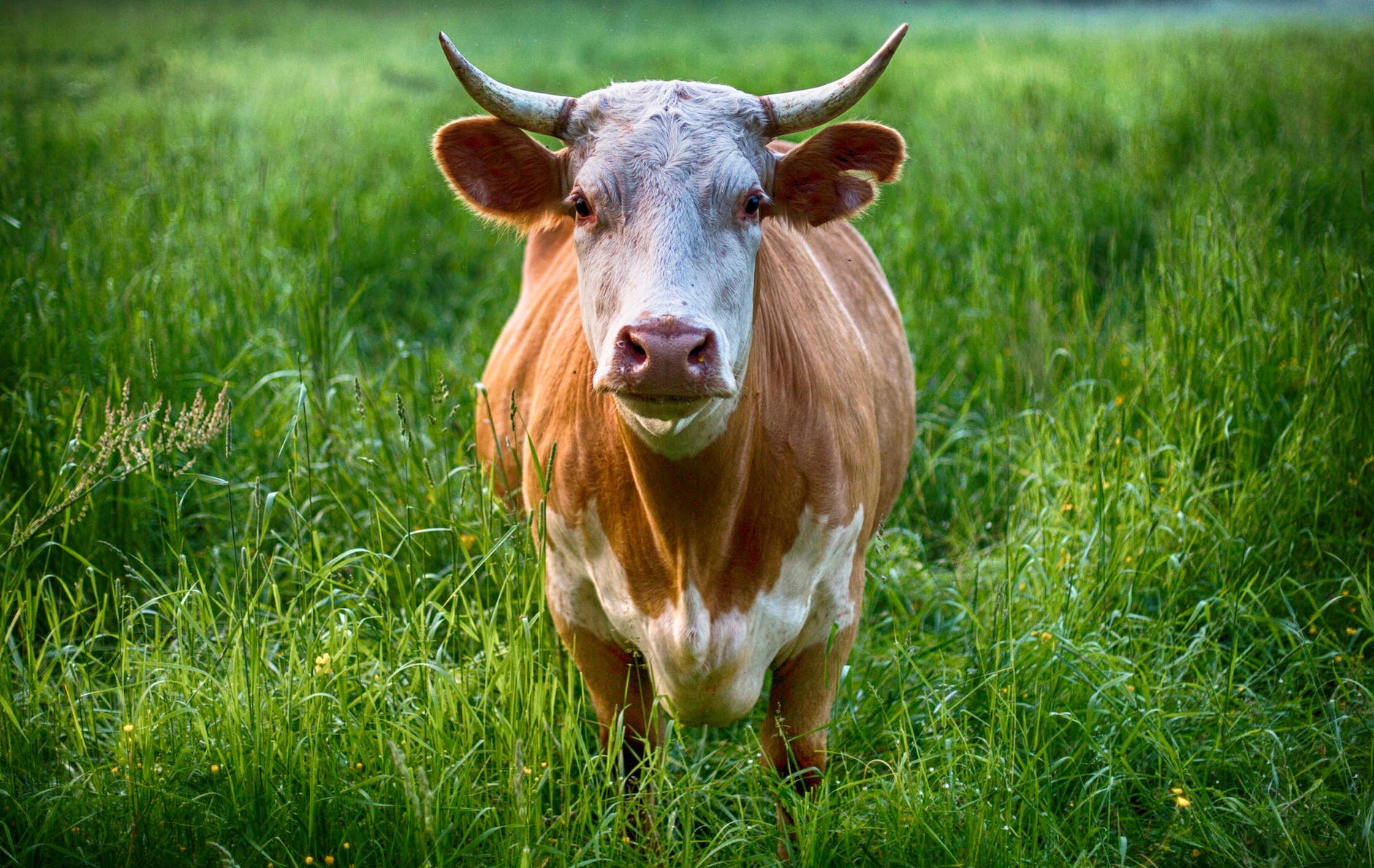
agriculture animal cattle close up
Photo by Pixabay Pexels.com

Definition of udhiyah and ruling thereon


What is meant by udhiyah (sacrifice)? Is it obligatory or Sunnah?.

Praise be to Allaah.
The word udhiyah means an animal of the ‘an’aam class (i.e., camel, cow, sheep or goat) that is slaughtered during the days of Eid al-Adha because of the Eid and as an act of worship, intending to draw closer to Allaah thereby.

This is one of the rituals of Islam prescribed in the Book of Allaah and the Sunnah of His Messenger (peace and blessings of Allaah be upon him), and according to the consensus of the Muslims.

In the Qur’aan:

1 – Allaah says (interpretation of the meaning):

“Therefore turn in prayer to your Lord and sacrifice (to Him only)”

[al-Kawthar 108:2]

2 – Allaah says (interpretation of the meaning):

“Say (O Muhammad): Verily, my Salaah (prayer), my sacrifice, my living, and my dying are for Allaah, the Lord of the ‘Aalameen (mankind, jinn and all that exists).

He has no partner. And of this I have been commanded, and I am the first of the Muslims”

[al-An’aam 6:162]

The word nusuk (translated here as sacrifice) means sacrifice; this is the view of Sa’eed ibn Jubayr. And it was said that it means all acts of worship, including sacrifice, which is more comprehensive.

3 – Allaah says (interpretation of the meaning):

“And for every nation We have appointed religious ceremonies, that they may mention the Name of Allaah over the beast of cattle that He has given them for food. And your Ilaah (God) is One Ilaah (God Allaah), so you must submit to Him Alone (in Islam). And (O Muhammad) give glad tidings to the Mukhbitoon [those who obey Allaah with humility and are humble from among the true believers of Islamic Monotheism]”

[al-Hajj 22:34]

In the Sunnah:

1 – It was narrated in Saheeh al-Bukhaari (5558) and Saheeh Muslim (1966) that Anas ibn Maalik (may Allaah be pleased with him) said: “The Prophet (peace and blessings of Allaah be upon him) sacrificed two white rams speckled with black. He slaughtered them with his own hand, said ‘Allaahu akbar’ and put his foot on their necks.”

2 – It was narrated that ‘Abd-Allaah ibn ‘Umar (may Allaah be pleased with him) said: “The Prophet (peace and blessings of Allaah be upon him) stayed in Madeenah for ten years, offering sacrifice (every year on Eid).” Narrated by Ahmad, 4935; al-Tirmidhi, 1507; classed as hasan by al-Albaani in Mishkaat al-Masaabeeh, 1475.

3 – It was narrated from ‘Uqbah ibn ‘Aamir (may Allaah be pleased with him) that the Prophet (peace and blessings of Allaah be upon him) shared out sacrificial animals amongst his companions, and ‘Uqbah got a sheep that was six months old. He said, “O Messenger of Allaah, I got a sheep that is six months old.” He said, “Offer it as a sacrifice.” Narrated by al-Bukhaari, 5547.

4 – It was narrated from al-Baraa’ ibn ‘Aazib (may Allaah be pleased with him) that the Prophet (peace and blessings of Allaah be upon him) said: “Whoever offers a sacrifice after the prayer has completed his rituals (of Eid) and has followed the way of the Muslims.” Narrated by al-Bukhaari, 5545.

The Prophet (peace and blessings of Allaah be upon him) offered sacrifices, as did his companions (may Allaah be pleased with them). And he said that sacrifice is the way of the Muslims.

Hence the Muslims are unanimously agreed that it is prescribed in Islam, as was narrated by more than one of the scholars.

But they differed as to whether it is Sunnah mu’akkadah (a confirmed Sunnah) or it is obligatory and it is not permissible to omit it.

The majority of scholars are of the view that it is Sunnah mu’akkadah. This is the view of al-Shaafa’i, Maalik and Ahmad according to his most well-known view.

Others were of the view that it is obligatory. This is the view of Abu Haneefah and one of the views narrated from Ahmad. This was also the view favoured by Ibn Taymiyah who said: “This is one of the views narrated in the madhhab of Maalik, or it appears to be the view of Maalik.”

From Risaalat Ahkaam al-Udhiyah wa’l-Dhakaah by Ibn ‘Uthaymeen (may Allaah have mercy on him).

Shaykh Muhammad ibn ‘Uthaymeen (may Allaah have mercy on him) said: “Udhiyah is Sunnah mu’akkadah for the one who is able to do it, so a person should offer the sacrifice on behalf of himself and the members of his household.”

Fataawa Ibn ‘Uthaymeen, 2/661.

REMINDER: 

If a person wants to offer an udhiyah, then it is haraam – according to the more correct view – for him to remove anything from his hair or nails until he offers his sacrifice, regardless of whether he offers his sacrifice at the beginning of the time for it, immediately after the Eid prayer, or at the end of the time, i.e., before sunset on the thirteenth of Dhu’l-Hijjah.

That is because of the report narrated by Muslim in his Saheeh (1977) from Umm Salamah (may Allah be pleased with her), who said: The Messenger of Allah (blessings and peace of Allah be upon him) said: “Whoever has an animal to sacrifice, when the new moon of Dhu’l-Hijjah appears, let him not remove anything from his hair or nails, until he has offered his sacrifice.”

https://islamqa.info/en/175381


May Allah enable us to draw near to Him with obligatory and voluntary acts of worship. Allahumma salli alaa Rasoolullah ameen.

Keep us in your duas !

Wasalam

Thurrock Muslims

THURROCKMUSLIMS.COM

share the good: http://wp.me/p4GU3D-n3

Continue reading

VIRTUES OF THE FIRST 10 DAYS DHUL HIJJAH! [SACRIFICE]

about/disclaimer

IN THE NAME OF ALLAH


VIRTUES OF THE FIRST 10 DAYS OF DHUL HIJJAH!  [SACRIFICE]


QURBANI/UDHIYAH- SACRIFICING AN ANIMAL IN OBEDIENCE TO ALLAH

Check out the previous post with some amazing tips on how to make the best of these 10 days

Best 10 days of the year

Want to know what udhiyah/Qurbani is? Read this:

agriculture animal cattle close up
Photo by Pixabay Pexels.com

Definition of udhiyah and ruling thereon


What is meant by udhiyah (sacrifice)? Is it obligatory or Sunnah?.

Praise be to Allaah.
The word udhiyah means an animal of the ‘an’aam class (i.e., camel, cow, sheep or goat) that is slaughtered during the days of Eid al-Adha because of the Eid and as an act of worship, intending to draw closer to Allaah thereby.

This is one of the rituals of Islam prescribed in the Book of Allaah and the Sunnah of His Messenger (peace and blessings of Allaah be upon him), and according to the consensus of the Muslims.

In the Qur’aan:

1 – Allaah says (interpretation of the meaning):

“Therefore turn in prayer to your Lord and sacrifice (to Him only)”

[al-Kawthar 108:2]

2 – Allaah says (interpretation of the meaning):

“Say (O Muhammad): Verily, my Salaah (prayer), my sacrifice, my living, and my dying are for Allaah, the Lord of the ‘Aalameen (mankind, jinn and all that exists).

He has no partner. And of this I have been commanded, and I am the first of the Muslims”

[al-An’aam 6:162]

The word nusuk (translated here as sacrifice) means sacrifice; this is the view of Sa’eed ibn Jubayr. And it was said that it means all acts of worship, including sacrifice, which is more comprehensive.

3 – Allaah says (interpretation of the meaning):

“And for every nation We have appointed religious ceremonies, that they may mention the Name of Allaah over the beast of cattle that He has given them for food. And your Ilaah (God) is One Ilaah (God Allaah), so you must submit to Him Alone (in Islam). And (O Muhammad) give glad tidings to the Mukhbitoon [those who obey Allaah with humility and are humble from among the true believers of Islamic Monotheism]”

[al-Hajj 22:34]

In the Sunnah:

1 – It was narrated in Saheeh al-Bukhaari (5558) and Saheeh Muslim (1966) that Anas ibn Maalik (may Allaah be pleased with him) said: “The Prophet (peace and blessings of Allaah be upon him) sacrificed two white rams speckled with black. He slaughtered them with his own hand, said ‘Allaahu akbar’ and put his foot on their necks.”

2 – It was narrated that ‘Abd-Allaah ibn ‘Umar (may Allaah be pleased with him) said: “The Prophet (peace and blessings of Allaah be upon him) stayed in Madeenah for ten years, offering sacrifice (every year on Eid).” Narrated by Ahmad, 4935; al-Tirmidhi, 1507; classed as hasan by al-Albaani in Mishkaat al-Masaabeeh, 1475.

3 – It was narrated from ‘Uqbah ibn ‘Aamir (may Allaah be pleased with him) that the Prophet (peace and blessings of Allaah be upon him) shared out sacrificial animals amongst his companions, and ‘Uqbah got a sheep that was six months old. He said, “O Messenger of Allaah, I got a sheep that is six months old.” He said, “Offer it as a sacrifice.” Narrated by al-Bukhaari, 5547.

4 – It was narrated from al-Baraa’ ibn ‘Aazib (may Allaah be pleased with him) that the Prophet (peace and blessings of Allaah be upon him) said: “Whoever offers a sacrifice after the prayer has completed his rituals (of Eid) and has followed the way of the Muslims.” Narrated by al-Bukhaari, 5545.

The Prophet (peace and blessings of Allaah be upon him) offered sacrifices, as did his companions (may Allaah be pleased with them). And he said that sacrifice is the way of the Muslims.

Hence the Muslims are unanimously agreed that it is prescribed in Islam, as was narrated by more than one of the scholars.

But they differed as to whether it is Sunnah mu’akkadah (a confirmed Sunnah) or it is obligatory and it is not permissible to omit it.

The majority of scholars are of the view that it is Sunnah mu’akkadah. This is the view of al-Shaafa’i, Maalik and Ahmad according to his most well-known view.

Others were of the view that it is obligatory. This is the view of Abu Haneefah and one of the views narrated from Ahmad. This was also the view favoured by Ibn Taymiyah who said: “This is one of the views narrated in the madhhab of Maalik, or it appears to be the view of Maalik.”

From Risaalat Ahkaam al-Udhiyah wa’l-Dhakaah by Ibn ‘Uthaymeen (may Allaah have mercy on him).

Shaykh Muhammad ibn ‘Uthaymeen (may Allaah have mercy on him) said: “Udhiyah is Sunnah mu’akkadah for the one who is able to do it, so a person should offer the sacrifice on behalf of himself and the members of his household.”

Fataawa Ibn ‘Uthaymeen, 2/661.

REMINDER: 

If a person wants to offer an udhiyah, then it is haraam – according to the more correct view – for him to remove anything from his hair or nails until he offers his sacrifice, regardless of whether he offers his sacrifice at the beginning of the time for it, immediately after the Eid prayer, or at the end of the time, i.e., before sunset on the thirteenth of Dhu’l-Hijjah.

That is because of the report narrated by Muslim in his Saheeh (1977) from Umm Salamah (may Allah be pleased with her), who said: The Messenger of Allah (blessings and peace of Allah be upon him) said: “Whoever has an animal to sacrifice, when the new moon of Dhu’l-Hijjah appears, let him not remove anything from his hair or nails, until he has offered his sacrifice.”

https://islamqa.info/en/175381


May Allah enable us to draw near to Him with obligatory and voluntary acts of worship. Allahumma salli alaa Rasoolullah ameen.

Keep us in your duas !

Wasalam

Thurrock Muslims

THURROCKMUSLIMS.COM

share the good: http://wp.me/p4GU3D-n3

Continue reading

STOP IT NOW!


STOP IT NOW!


STOP oppression and injustice around the world.

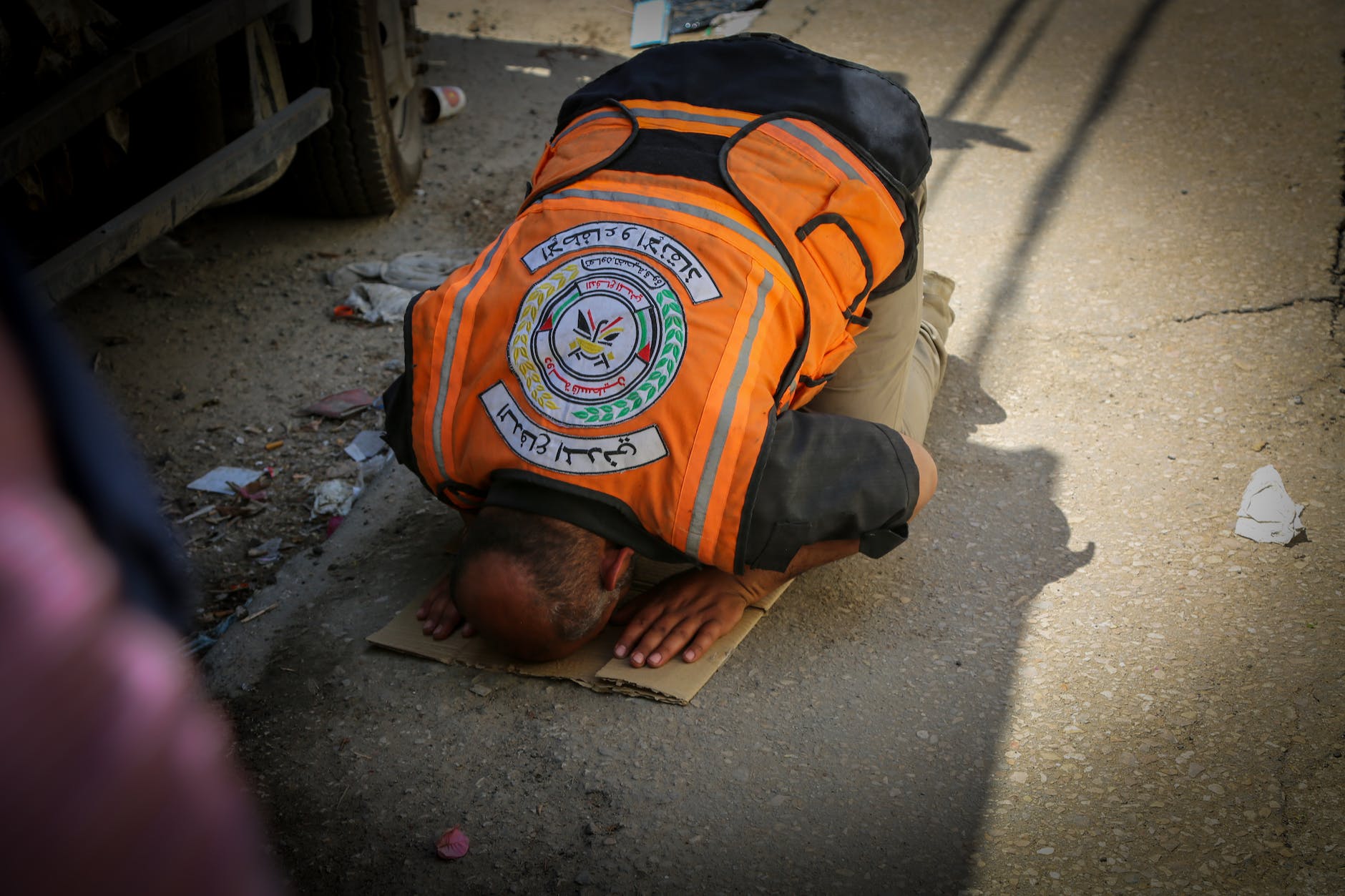
STOP the genocide in Gaza and Palestine! The 75+ year old land struggle in the Middle East is only getting worse. 10,000+ Palestinians killed. ICU units destroyed. Desperate mothers giving birth amidst chemical bombs. Newborns living no longer than a few hours. Ailing and terminally ill patients deprived of medicine because hospitals no longer have supplies, some hospitals are no longer-many have been bombed to ruins.

Photo by Musa Zanoun on Pexels.com

Israeli forces have being murdering and bombing Gazans relentlessly for over a month. The apartheid state has been targetting homes, schools, hospital,shelters, Mosques, Churches, UN buildings, and every last person in the genocide cage that is Gaza. People, elders, men, women, children & babies are being collectively punished, bombed, starved, deprived, disconnected and destroyed. The occupying Zionist force has a clear intention: ethnic cleansing and genocide of Palestinians. The world’s largest open air prison turned catastrophic mass cemetary is on the brink of extinction, so long as the humane and just among us cease to speak up.

We cannot be complicit with the aggressors as they continue the butchery before our eyes. The criminals must be held to account and stopped.

This is 2023.

We haven’t forgotten Iraq- 1 million killed unlawfully. Remember also Afghanistan, Syria, Libya, Yemen, Bosnia, Xinxang Uiyghurs, Burma Rohingyas and many more nations whose people were destroyed by occupying forces, with the help of blood-thirsty governments’ unlawful provision of homicidal weaponry.

So we say STOP. STOP IT NOW.

Stop the killing of innocents around the world. We as Muslims, of the Thurrock community, as British residents/citizens, as members of the global community, we reject, oppose and vehemently denounce the brutal genocide and terrorism inflicted by the apartheid Israeli regime upon our fellow human beings in Gaza and Palestine. We along with millions of conscious, peaceful citizens call for an immediate and permanent ceasefire in Gaza and Palestine, we demand peace and an end to the oppression, seige, apartheid, ethnic cleaning and displacement. Stop aiding war-hungry nations like the illegal apartheid Israeli state, stop selling them arms and weapons. Stop aiding terrorism. We taxpayers don’t want our money spent on murder, taking lives and destroying people.

We’ve seen enough horrorific imagery of bleeding, injured babies, now missing limbs and needing amputations. We’ve seen concrete-dusted infants with their heads blown off, lying lifeless in the hands of medics. We’re tired of seeing the pain, the panic, the trauma and destruction. We’ve seen groups of men desperately rescuing bodies trapped beneath rubble. We’ve seen mothers and fathers mouring over their precious children, newborns, infants and teenagers. We’ve seen traumatised children recounting their recent orphanhood as they stare blankly into the camera. We’ve seen paramedics bravely smiling and comforting rescued babies, whose names they don’t even know, breaking down in tears themselves from overwhelm with the gravity of the situation. We’ve seen journalists reduced to tears of frustration, fed up of the deliberate targetting of their people. We’ve seen lines of hungry and thirsty people , queing up with containers hoping they’ll get some water for the day, hoping they’ll get some food, facing death by either bombings or forced starvation. The utter chaos has to stop. Mercy must prevail.

If Britain was in the position of Gaza today, God forbid, surely we would not want the world to turn a blind eye to the suffering and calls for aid. Therefore, we cannot bare to witness the calculated decimation of innocent civilians, elders, men, women, children, babies and their homes and buildings. What happened to humanity? Is not life to be preserved?

Narrated Anas:

Allah’s Messenger (ﷺ) said, “Help your brother, whether he is an oppressor or he is an oppressed one. People asked, “O Allah’s Messenger (ﷺ)! It is all right to help him if he is oppressed, but how should we help him if he is an oppressor?” The Prophet (ﷺ) said, “By preventing him from oppressing others.”

(Sahih Hadith: Bukhari)

Enough is enough, we cannot turn a blind eye to oppression. Speak up and do the right thing, be honest and champion the rights of the oppressed. Be the voice for the weak. Be on the right side of history. Stop the violence. The world needs faith, peace, justice, love and harmony. Let’s not be of those who, for years to come, will wallow in guilty regret for enabling murder.

CEASEFIRE NOW. SAVE LIVES.

FREE PALESTINE, FREE GAZA. FREE THE OPPRESSED.

WORLD PEACE, JUSTICE AND HARMONY. InshaAllah.

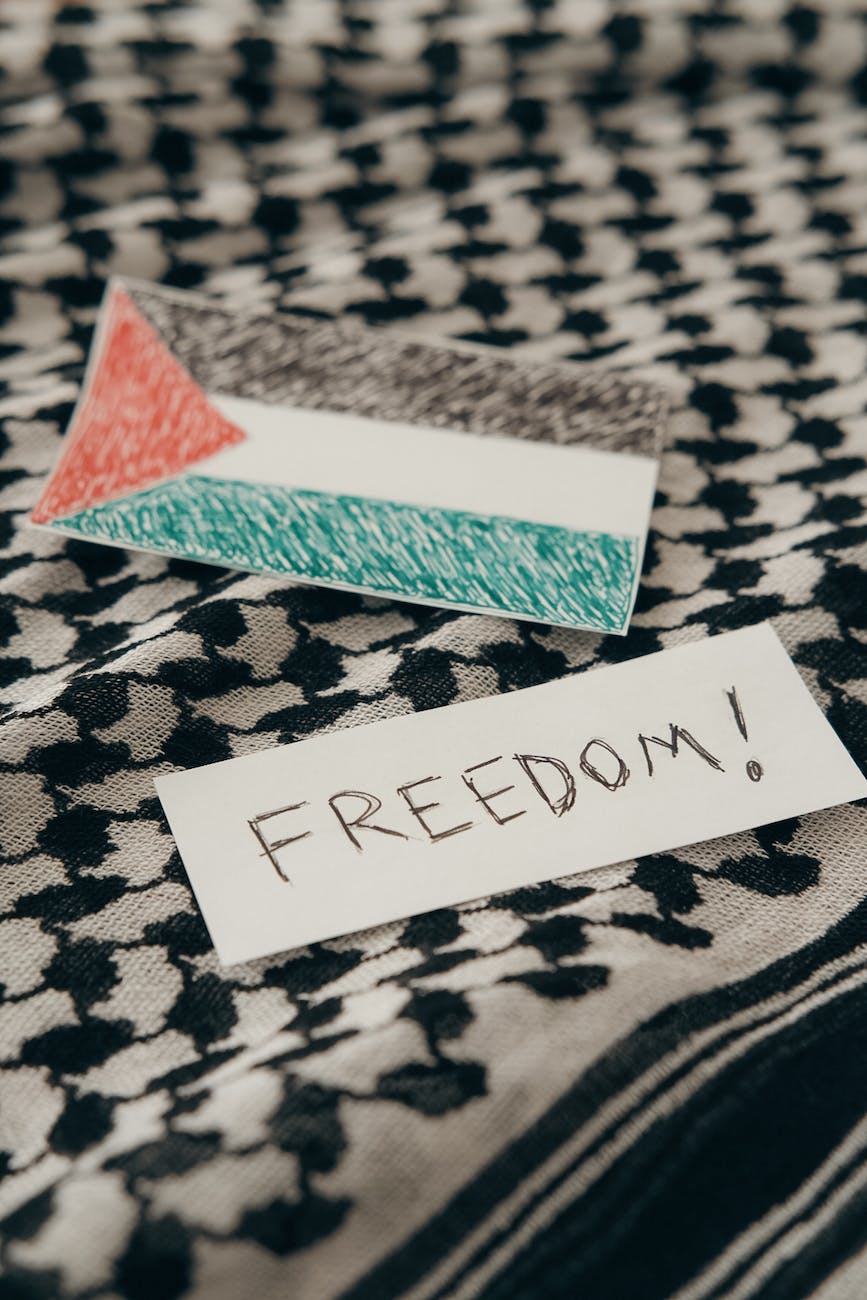
Photo by Beyzaa Yurtkuran on Pexels.com

Being persecuted on account of faith in Allah, is a pattern in history. Eradicating Muslim populations, will not eradicate Islam. Allah will preserve His religion. It is through submission to Allah that we will find true peace. May Allah protect Masjid-al-Aqsa, its inhabitants and all of us in the ummah. Wasallallahu ala nabiyina Muhammad. Amin

Thurrock Muslim Community.

ThurrockMuslims.com

About/disclaimer

Read more: STOP IT NOW!

Sources/further reading:

11000+ Gazans killed by Israeli regime

Gaza destruction is Israel’s goal

Colonial genocide of our time

We need compassion- OnlyForTheOne

Jordanian Queen on the root cause of the conflict

Double standards over global conflicts

Sacked and silenced for opposing violence

Jordanian Queen on Palestine and Israel

Can Turkey mediate with diplomacy, between the oppositions

Anti-zionist orthodox Jewish teen faces persecution for refusing to join the military.

Anti-zionism is wrongly conflated with anti-semitism to legitimise Israeli propaganda- Avi S

Tax-payers sue US president for funding war-monger Israel in recent Gaza onslaught

The Balfour declaration

Smeared for opposing war crimes

How Israeli lies and its true intentions

KNOWLEDGE IS LIGHT- LESSON 3 PART 1

Bismillah, walhamdulillah, wasalatu wassalaam alaa rasoolillah!

Asalamu alaykum!

Welcome to lesson 3, part 1!

Previously, we discussed the antithesis of Tawheed, namely ‘Shirk’ (see the previous lesson) and it’s categories. 

Shirk is the biggest sin Allah won’t forgive! May Allah protect us!

pattern pentagons

Do you remember the categories of Tawheed (see part 2, part 3, part 4 of lesson 1) ?  Also check out the categories of Shirk...


Taqwa, Saints and Graves.


Taqwa means to be concious and aware of Allah (The One True God), in all that we do.  We fear and love and hope in Allah. It is the driving force behind living faith. The higher our level of taqwa, the higher our faith and rank.

We can’t claim piety or sainthood/wali for ourselves or others. Only Allah knows who is truly pious. The criterion for divine friendship/walaya (to be of the close friends of Allah) is having iman (faith) and Taqwa (God-conciousness). We cannot designate ourselves or others as such (i.e. wali), as this is decided by Allah, He knows the hearts and the true piety within.

No so-called saint, dead or alive, can give you anything, nor can they benefit or harm. Allah alone is the true Provider and He alone controls the universe.

Grave worship, that is visiting the graves of the desceased to ask them for something or similar, is a huge sin. If we ask, we should ask from Allah alone, for Allah is The Ever-Living, He never dies and He is the Provider, The Rich.

The practice of visiting graves of “saints”/”pirs” or “walis” and praying to them is a serious crime and a form of shirk (the biggest sin Allah won’t forgive).

May Allah protect us from all types of shirk! May Allah, The One, The Compeller, grant us perfect Tawheed for His sake alone forever! May Allah forgive us for any error. Allahumma salli alaa Muhammad Sallallahu alayhi wasallam. ameen!

ThurrockMuslims.com

about/disclaimer


VIRTUES OF THE FIRST 10 DAYS DHUL HIJJAH! [SACRIFICE]

about/disclaimer

IN THE NAME OF ALLAH


VIRTUES OF THE FIRST 10 DAYS OF DHUL HIJJAH!  [SACRIFICE]


QURBANI/UDHIYAH- SACRIFICING AN ANIMAL IN OBEDIENCE TO ALLAH

Check out the previous post with some amazing tips on how to make the best of these 10 days

Best 10 days of the year

Want to know what udhiyah/Qurbani is? Read this:

agriculture animal cattle close up
Photo by Pixabay Pexels.com

Definition of udhiyah and ruling thereon


What is meant by udhiyah (sacrifice)? Is it obligatory or Sunnah?.

Praise be to Allaah.
The word udhiyah means an animal of the ‘an’aam class (i.e., camel, cow, sheep or goat) that is slaughtered during the days of Eid al-Adha because of the Eid and as an act of worship, intending to draw closer to Allaah thereby.

This is one of the rituals of Islam prescribed in the Book of Allaah and the Sunnah of His Messenger (peace and blessings of Allaah be upon him), and according to the consensus of the Muslims.

In the Qur’aan:

1 – Allaah says (interpretation of the meaning):

“Therefore turn in prayer to your Lord and sacrifice (to Him only)”

[al-Kawthar 108:2]

2 – Allaah says (interpretation of the meaning):

“Say (O Muhammad): Verily, my Salaah (prayer), my sacrifice, my living, and my dying are for Allaah, the Lord of the ‘Aalameen (mankind, jinn and all that exists).

He has no partner. And of this I have been commanded, and I am the first of the Muslims”

[al-An’aam 6:162]

The word nusuk (translated here as sacrifice) means sacrifice; this is the view of Sa’eed ibn Jubayr. And it was said that it means all acts of worship, including sacrifice, which is more comprehensive.

3 – Allaah says (interpretation of the meaning):

“And for every nation We have appointed religious ceremonies, that they may mention the Name of Allaah over the beast of cattle that He has given them for food. And your Ilaah (God) is One Ilaah (God Allaah), so you must submit to Him Alone (in Islam). And (O Muhammad) give glad tidings to the Mukhbitoon [those who obey Allaah with humility and are humble from among the true believers of Islamic Monotheism]”

[al-Hajj 22:34]

In the Sunnah:

1 – It was narrated in Saheeh al-Bukhaari (5558) and Saheeh Muslim (1966) that Anas ibn Maalik (may Allaah be pleased with him) said: “The Prophet (peace and blessings of Allaah be upon him) sacrificed two white rams speckled with black. He slaughtered them with his own hand, said ‘Allaahu akbar’ and put his foot on their necks.”

2 – It was narrated that ‘Abd-Allaah ibn ‘Umar (may Allaah be pleased with him) said: “The Prophet (peace and blessings of Allaah be upon him) stayed in Madeenah for ten years, offering sacrifice (every year on Eid).” Narrated by Ahmad, 4935; al-Tirmidhi, 1507; classed as hasan by al-Albaani in Mishkaat al-Masaabeeh, 1475.

3 – It was narrated from ‘Uqbah ibn ‘Aamir (may Allaah be pleased with him) that the Prophet (peace and blessings of Allaah be upon him) shared out sacrificial animals amongst his companions, and ‘Uqbah got a sheep that was six months old. He said, “O Messenger of Allaah, I got a sheep that is six months old.” He said, “Offer it as a sacrifice.” Narrated by al-Bukhaari, 5547.

4 – It was narrated from al-Baraa’ ibn ‘Aazib (may Allaah be pleased with him) that the Prophet (peace and blessings of Allaah be upon him) said: “Whoever offers a sacrifice after the prayer has completed his rituals (of Eid) and has followed the way of the Muslims.” Narrated by al-Bukhaari, 5545.

The Prophet (peace and blessings of Allaah be upon him) offered sacrifices, as did his companions (may Allaah be pleased with them). And he said that sacrifice is the way of the Muslims.

Hence the Muslims are unanimously agreed that it is prescribed in Islam, as was narrated by more than one of the scholars.

But they differed as to whether it is Sunnah mu’akkadah (a confirmed Sunnah) or it is obligatory and it is not permissible to omit it.

The majority of scholars are of the view that it is Sunnah mu’akkadah. This is the view of al-Shaafa’i, Maalik and Ahmad according to his most well-known view.

Others were of the view that it is obligatory. This is the view of Abu Haneefah and one of the views narrated from Ahmad. This was also the view favoured by Ibn Taymiyah who said: “This is one of the views narrated in the madhhab of Maalik, or it appears to be the view of Maalik.”

From Risaalat Ahkaam al-Udhiyah wa’l-Dhakaah by Ibn ‘Uthaymeen (may Allaah have mercy on him).

Shaykh Muhammad ibn ‘Uthaymeen (may Allaah have mercy on him) said: “Udhiyah is Sunnah mu’akkadah for the one who is able to do it, so a person should offer the sacrifice on behalf of himself and the members of his household.”

Fataawa Ibn ‘Uthaymeen, 2/661.

REMINDER: 

If a person wants to offer an udhiyah, then it is haraam – according to the more correct view – for him to remove anything from his hair or nails until he offers his sacrifice, regardless of whether he offers his sacrifice at the beginning of the time for it, immediately after the Eid prayer, or at the end of the time, i.e., before sunset on the thirteenth of Dhu’l-Hijjah.

That is because of the report narrated by Muslim in his Saheeh (1977) from Umm Salamah (may Allah be pleased with her), who said: The Messenger of Allah (blessings and peace of Allah be upon him) said: “Whoever has an animal to sacrifice, when the new moon of Dhu’l-Hijjah appears, let him not remove anything from his hair or nails, until he has offered his sacrifice.”

https://islamqa.info/en/175381


May Allah enable us to draw near to Him with obligatory and voluntary acts of worship. Allahumma salli alaa Rasoolullah ameen.

Keep us in your duas !

Wasalam

Thurrock Muslims

THURROCKMUSLIMS.COM

share the good: http://wp.me/p4GU3D-n3

Continue reading

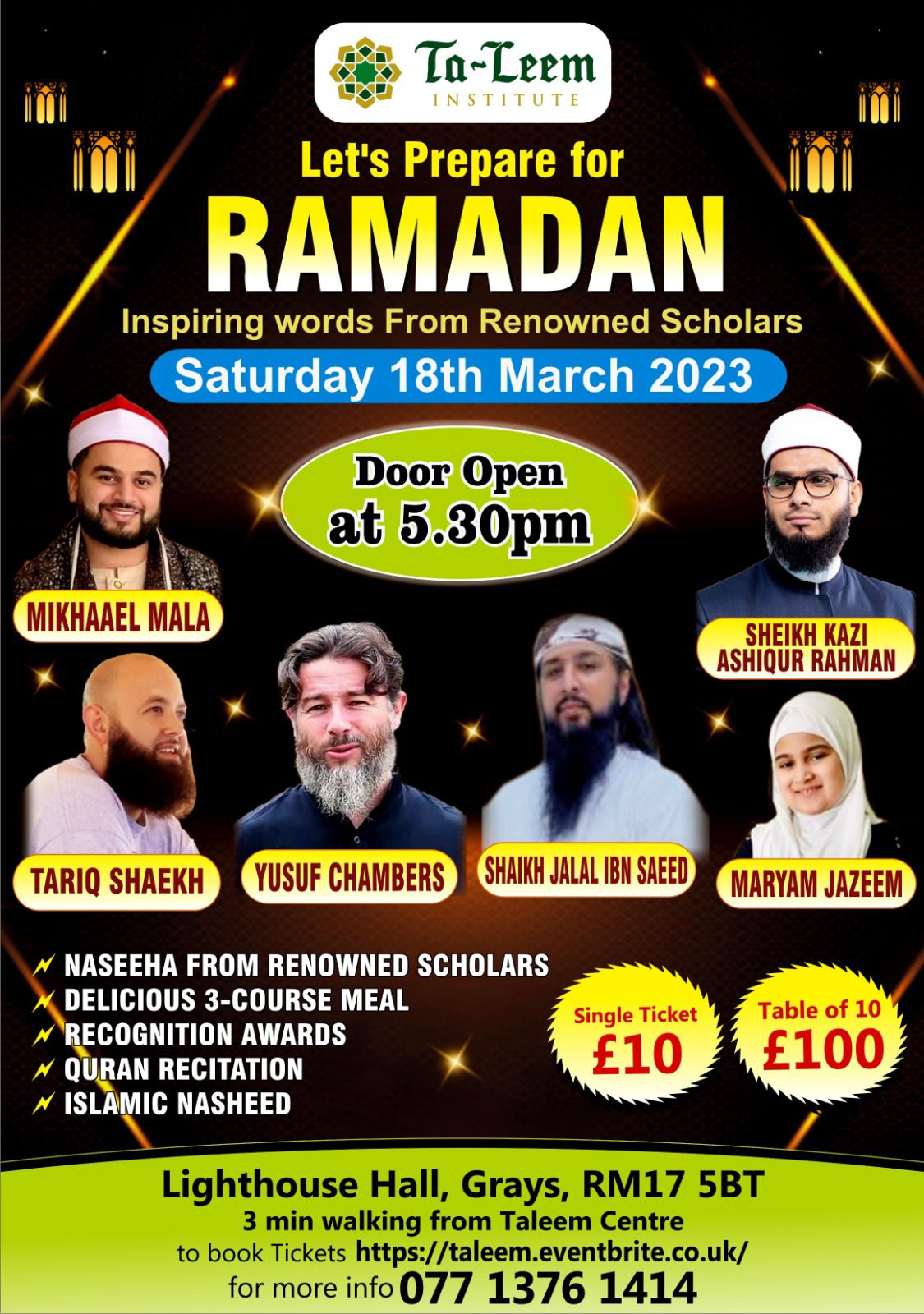
RAMADAN FAMILY DINNER EVENT 18 MARCH 2023 IN GRAYS/THURROCK/ESSEX- TALEEM FOUNDATION

RAMADAN FAMILY EVENT 18 MARCH 2023 IN GRAYS/THURROCK/ESSEX- TALEEM FOUNDATION

Don’t be deprived! Come along with family and friends.

(Contact organiseer, for tickets : https://www.eventbrite.co.uk/e/ramadan-family-dinner-event-tickets-543620853607 

Come and join a gathering where Allah is mentioned. Let’s win this Ramadan in sha Allah.

*RAMADAN FAMILY EVENT*

Taleem would like to invite you to a special family dinner Ramadan event. Join us for a beneficial convention exploring tips on how to prepare for Ramadan.

*Saturday 18th March 2023*

*Door Open 5.30 P.M*

Venue: *Lighthouse Hall, Grays, RM17 5BT*

*NASEEHA FROM RENOWNED SCHOLARS AND NASHEED*

– Yusuf Chambers

– Shaikh Saeed ibn Jalal

– Sheikh Ashiqur Rahman

– Mikhaael Mala

– Tariq Shaikh 

– Marayam Jazeem

* Delicious 3-Course Meal

* Sponsors Recognition Awards

* Islamic Nasheeds

To *book tickets* click here 

https://taleem.eventbrite.co.uk

Please *Share* the poster

Thurrock Muslim Community

Thurrockmuslims.com

About/disclaimer

Read more: RAMADAN FAMILY DINNER EVENT 18 MARCH 2023 IN GRAYS/THURROCK/ESSEX- TALEEM FOUNDATION

Supported by Travel Link, ATOL and IATA accredited professional travel services, flights, holidays and umrah.

VIRTUES OF THE FIRST 10 DAYS DHUL HIJJAH! [SACRIFICE]

IN THE NAME OF ALLAH


VIRTUES OF THE FIRST 10 DAYS OF DHUL HIJJAH!  [SACRIFICE]


QURBANI/UDHIYAH- SACRIFICING AN ANIMAL IN OBEDIENCE TO ALLAH

Check out the previous post with some amazing tips on how to make the best of these 10 days

Best 10 days of the year

Want to know what udhiyah/Qurbani is? Read this:

4


Definition of udhiyah and ruling thereon


What is meant by udhiyah (sacrifice)? Is it obligatory or Sunnah?.

Praise be to Allaah.
The word udhiyah means an animal of the ‘an’aam class (i.e., camel, cow, sheep or goat) that is slaughtered during the days of Eid al-Adha because of the Eid and as an act of worship, intending to draw closer to Allaah thereby.

This is one of the rituals of Islam prescribed in the Book of Allaah and the Sunnah of His Messenger (peace and blessings of Allaah be upon him), and according to the consensus of the Muslims.

In the Qur’aan:

1 – Allaah says (interpretation of the meaning):

“Therefore turn in prayer to your Lord and sacrifice (to Him only)”

[al-Kawthar 108:2]

2 – Allaah says (interpretation of the meaning):

“Say (O Muhammad): Verily, my Salaah (prayer), my sacrifice, my living, and my dying are for Allaah, the Lord of the ‘Aalameen (mankind, jinn and all that exists).

He has no partner. And of this I have been commanded, and I am the first of the Muslims”

[al-An’aam 6:162]

The word nusuk (translated here as sacrifice) means sacrifice; this is the view of Sa’eed ibn Jubayr. And it was said that it means all acts of worship, including sacrifice, which is more comprehensive.

3 – Allaah says (interpretation of the meaning):

“And for every nation We have appointed religious ceremonies, that they may mention the Name of Allaah over the beast of cattle that He has given them for food. And your Ilaah (God) is One Ilaah (God Allaah), so you must submit to Him Alone (in Islam). And (O Muhammad) give glad tidings to the Mukhbitoon [those who obey Allaah with humility and are humble from among the true believers of Islamic Monotheism]”

[al-Hajj 22:34]

In the Sunnah:

1 – It was narrated in Saheeh al-Bukhaari (5558) and Saheeh Muslim (1966) that Anas ibn Maalik (may Allaah be pleased with him) said: “The Prophet (peace and blessings of Allaah be upon him) sacrificed two white rams speckled with black. He slaughtered them with his own hand, said ‘Allaahu akbar’ and put his foot on their necks.”

2 – It was narrated that ‘Abd-Allaah ibn ‘Umar (may Allaah be pleased with him) said: “The Prophet (peace and blessings of Allaah be upon him) stayed in Madeenah for ten years, offering sacrifice (every year on Eid).” Narrated by Ahmad, 4935; al-Tirmidhi, 1507; classed as hasan by al-Albaani in Mishkaat al-Masaabeeh, 1475.

3 – It was narrated from ‘Uqbah ibn ‘Aamir (may Allaah be pleased with him) that the Prophet (peace and blessings of Allaah be upon him) shared out sacrificial animals amongst his companions, and ‘Uqbah got a sheep that was six months old. He said, “O Messenger of Allaah, I got a sheep that is six months old.” He said, “Offer it as a sacrifice.” Narrated by al-Bukhaari, 5547.

4 – It was narrated from al-Baraa’ ibn ‘Aazib (may Allaah be pleased with him) that the Prophet (peace and blessings of Allaah be upon him) said: “Whoever offers a sacrifice after the prayer has completed his rituals (of Eid) and has followed the way of the Muslims.” Narrated by al-Bukhaari, 5545.

The Prophet (peace and blessings of Allaah be upon him) offered sacrifices, as did his companions (may Allaah be pleased with them). And he said that sacrifice is the way of the Muslims.

Hence the Muslims are unanimously agreed that it is prescribed in Islam, as was narrated by more than one of the scholars.

But they differed as to whether it is Sunnah mu’akkadah (a confirmed Sunnah) or it is obligatory and it is not permissible to omit it.

The majority of scholars are of the view that it is Sunnah mu’akkadah. This is the view of al-Shaafa’i, Maalik and Ahmad according to his most well-known view.

Others were of the view that it is obligatory. This is the view of Abu Haneefah and one of the views narrated from Ahmad. This was also the view favoured by Ibn Taymiyah who said: “This is one of the views narrated in the madhhab of Maalik, or it appears to be the view of Maalik.”

From Risaalat Ahkaam al-Udhiyah wa’l-Dhakaah by Ibn ‘Uthaymeen (may Allaah have mercy on him).

Shaykh Muhammad ibn ‘Uthaymeen (may Allaah have mercy on him) said: “Udhiyah is Sunnah mu’akkadah for the one who is able to do it, so a person should offer the sacrifice on behalf of himself and the members of his household.”

Fataawa Ibn ‘Uthaymeen, 2/661.

REMINDER: 

If a person wants to offer an udhiyah, then it is haraam – according to the more correct view – for him to remove anything from his hair or nails until he offers his sacrifice, regardless of whether he offers his sacrifice at the beginning of the time for it, immediately after the Eid prayer, or at the end of the time, i.e., before sunset on the thirteenth of Dhu’l-Hijjah.

That is because of the report narrated by Muslim in his Saheeh (1977) from Umm Salamah (may Allah be pleased with her), who said: The Messenger of Allah (blessings and peace of Allah be upon him) said: “Whoever has an animal to sacrifice, when the new moon of Dhu’l-Hijjah appears, let him not remove anything from his hair or nails, until he has offered his sacrifice.”

https://islamqa.info/en/175381


May Allah enable us to draw near to Him with obligatory and voluntary acts of worship. Allahumma salli alaa Rasoolullah ameen.

Keep us in your duas !

Wasalam

Thurrock Muslims

THURROCKMUSLIMS.COM

share the good: http://wp.me/p4GU3D-n3

Continue reading

Countdown to RAMADAN- reminder to make up missed fasts before Ramadan 1443

Asalamu alaykum

Bismillah

We are nearly at the end of the 5th month 1443, and those of us who owe missed fasts from previous Ramadan, we really must make them up now in sha Allah!

Take advantage of the short days. Let us put our trust in Allah, and it will be alright. (Alhamdulillah) Remember Allah is Al-Qadeer (capable of all things) and He will surely help us and make it possible.

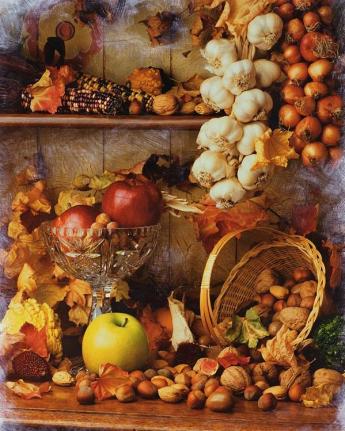
fruits agriculture

Trust Allah, that we can do it! And it’s good preparation for Ramadan in sha Allah!

Be inspired by those who have genuine difficulty/lack of resources and food, but soldier on for the sake of Allah.

Remember Allah gave us a lot more than others, so let’s drop the excuses and start showing Allah more gratitude by obeying Him as we owe Him everything, because He owns everything!!!

May Allah grant us the ability. May Allah make us sincere and make our fasting easy, rewarded and accepted and may He grant us many Ramadans in His obedience, Ya Rabb al aalameen! Allahumma Salli alaa Rasoolillah Muhammad sallallahu alayhi wasallam!

Ameen.

Peace and love.

wasalam.

ThurrockMuslims.com

jumada al ula 1443

VIRTUES OF THE FIRST 10 DAYS DHUL HIJJAH! [SACRIFICE]

IN THE NAME OF ALLAH


VIRTUES OF THE FIRST 10 DAYS OF DHUL HIJJAH!  [SACRIFICE]


QURBANI/UDHIYAH- SACRIFICING AN ANIMAL IN OBEDIENCE TO ALLAH

Check out the previous post with some amazing tips on how to make the best of these 10 days

Best 10 days of the year

Want to know what udhiyah/Qurbani is? Read this:

Definition of udhiyah and ruling thereon


What is meant by udhiyah (sacrifice)? Is it obligatory or Sunnah?.

Praise be to Allaah.
The word udhiyah means an animal of the ‘an’aam class (i.e., camel, cow, sheep or goat) that is slaughtered during the days of Eid al-Adha because of the Eid and as an act of worship, intending to draw closer to Allaah thereby.

This is one of the rituals of Islam prescribed in the Book of Allaah and the Sunnah of His Messenger (peace and blessings of Allaah be upon him), and according to the consensus of the Muslims.

In the Qur’aan:

1 – Allaah says (interpretation of the meaning):

“Therefore turn in prayer to your Lord and sacrifice (to Him only)”

[al-Kawthar 108:2]

2 – Allaah says (interpretation of the meaning):

“Say (O Muhammad): Verily, my Salaah (prayer), my sacrifice, my living, and my dying are for Allaah, the Lord of the ‘Aalameen (mankind, jinn and all that exists).

He has no partner. And of this I have been commanded, and I am the first of the Muslims”

[al-An’aam 6:162]

The word nusuk (translated here as sacrifice) means sacrifice; this is the view of Sa’eed ibn Jubayr. And it was said that it means all acts of worship, including sacrifice, which is more comprehensive.

3 – Allaah says (interpretation of the meaning):

“And for every nation We have appointed religious ceremonies, that they may mention the Name of Allaah over the beast of cattle that He has given them for food. And your Ilaah (God) is One Ilaah (God Allaah), so you must submit to Him Alone (in Islam). And (O Muhammad) give glad tidings to the Mukhbitoon [those who obey Allaah with humility and are humble from among the true believers of Islamic Monotheism]”

[al-Hajj 22:34]

In the Sunnah:

1 – It was narrated in Saheeh al-Bukhaari (5558) and Saheeh Muslim (1966) that Anas ibn Maalik (may Allaah be pleased with him) said: “The Prophet (peace and blessings of Allaah be upon him) sacrificed two white rams speckled with black. He slaughtered them with his own hand, said ‘Allaahu akbar’ and put his foot on their necks.”

2 – It was narrated that ‘Abd-Allaah ibn ‘Umar (may Allaah be pleased with him) said: “The Prophet (peace and blessings of Allaah be upon him) stayed in Madeenah for ten years, offering sacrifice (every year on Eid).” Narrated by Ahmad, 4935; al-Tirmidhi, 1507; classed as hasan by al-Albaani in Mishkaat al-Masaabeeh, 1475.

3 – It was narrated from ‘Uqbah ibn ‘Aamir (may Allaah be pleased with him) that the Prophet (peace and blessings of Allaah be upon him) shared out sacrificial animals amongst his companions, and ‘Uqbah got a sheep that was six months old. He said, “O Messenger of Allaah, I got a sheep that is six months old.” He said, “Offer it as a sacrifice.” Narrated by al-Bukhaari, 5547.

4 – It was narrated from al-Baraa’ ibn ‘Aazib (may Allaah be pleased with him) that the Prophet (peace and blessings of Allaah be upon him) said: “Whoever offers a sacrifice after the prayer has completed his rituals (of Eid) and has followed the way of the Muslims.” Narrated by al-Bukhaari, 5545.

The Prophet (peace and blessings of Allaah be upon him) offered sacrifices, as did his companions (may Allaah be pleased with them). And he said that sacrifice is the way of the Muslims.

Hence the Muslims are unanimously agreed that it is prescribed in Islam, as was narrated by more than one of the scholars.

But they differed as to whether it is Sunnah mu’akkadah (a confirmed Sunnah) or it is obligatory and it is not permissible to omit it.

The majority of scholars are of the view that it is Sunnah mu’akkadah. This is the view of al-Shaafa’i, Maalik and Ahmad according to his most well-known view.

Others were of the view that it is obligatory. This is the view of Abu Haneefah and one of the views narrated from Ahmad. This was also the view favoured by Ibn Taymiyah who said: “This is one of the views narrated in the madhhab of Maalik, or it appears to be the view of Maalik.”

From Risaalat Ahkaam al-Udhiyah wa’l-Dhakaah by Ibn ‘Uthaymeen (may Allaah have mercy on him).

Shaykh Muhammad ibn ‘Uthaymeen (may Allaah have mercy on him) said: “Udhiyah is Sunnah mu’akkadah for the one who is able to do it, so a person should offer the sacrifice on behalf of himself and the members of his household.”

Fataawa Ibn ‘Uthaymeen, 2/661.

REMINDER: 

If a person wants to offer an udhiyah, then it is haraam – according to the more correct view – for him to remove anything from his hair or nails until he offers his sacrifice, regardless of whether he offers his sacrifice at the beginning of the time for it, immediately after the Eid prayer, or at the end of the time, i.e., before sunset on the thirteenth of Dhu’l-Hijjah.

That is because of the report narrated by Muslim in his Saheeh (1977) from Umm Salamah (may Allah be pleased with her), who said: The Messenger of Allah (blessings and peace of Allah be upon him) said: “Whoever has an animal to sacrifice, when the new moon of Dhu’l-Hijjah appears, let him not remove anything from his hair or nails, until he has offered his sacrifice.”

https://islamqa.info/en/175381


May Allah enable us to draw near to Him with obligatory and voluntary acts of worship. Allahumma salli alaa Rasoolullah ameen.

Keep us in your duas !

Wasalam

Thurrock Muslims

THURROCKMUSLIMS.COM

share the good: http://wp.me/p4GU3D-n3

Continue reading

Countdown to RAMADAN- reminder to make up missed fasts before Ramadan 1442

Asalamu alaykum

Bismillah

We are in the sacred month of Rajab 1442, and those of us who owe missed fasts from previous Ramadan, we really must make them up now in sha Allah!

Don’t worry about the length of the day etc, let us put our trust in Allah, and it will be alright. (Alhamdulillah) Remember Allah is Al-Qadeer (capable of all things) and He will surely help us and make it possible.

fruits agriculture

Trust Allah, that we can do it! And it’s good preparation for Ramadan in sha Allah!

Be inspired by those who have genuine difficulty/lack of resources and food, but soldier on for the sake of Allah.

Remember Allah gave us a lot more than others, so let’s drop the excuses and start showing Allah more gratitude by obeying Him as we owe Him everything, because He owns everything!!!

May Allah grant us the ability. May Allah make us sincere and make our fasting easy, rewarded and accepted and may He grant us many Ramadans in His obedience, Ya Rabb al aalameen! Allahumma Salli alaa Rasoolillah Muhammad sallallahu alayhi wasallam!

Ameen.

Peace and love.

wasalam.

ThurrockMuslims.com

Rajab 1442