
asalamu alaykum.
Peace be upon you.
Listen to this, and be amazed. : )
With love for the sake of Allah.
Thurrock Muslims
asalamu alaykum.
Peace be upon you.
Listen to this, and be amazed. : )
With love for the sake of Allah.
Thurrock Muslims
In the name of Allah, The Most Gracious The Most Merciful.
Peace people!
Guess what, it’s December again and we’re fast approaching the holiday period.
So we’re all dazzled by the funky lights, surrounded by lofty pine trees, bombarded with special offers and advertisements and perhaps even, confronted by some big old man in a red hat and suit… and ho, ho, how has this got anything to do with this post? Well, I’m getting to it : ]

Now since we are in Britain, and it has traditionally been known as a Christian country, Christmas day, i.e. 25 December is considered a national holiday. You can argue all you want that its been commercialised and it’s no longer a religious thing, but my friend, that’s not the point.
Let’s have a look at the history of Christmas:
According to Britannica Encyclopaedia, Christmas has become a Christian festival where Christians believe they are celebrating the birth of Christ, or Jesus. Historically, however, the date coincides with pagan Roman festivals which celebrated the winter solstice. It is believed that early Christians wanted to celebrate the 25th to coincide with the pagan festival. There is no clear statement in the New testament supporting the celebration of Jesus’ birth on the 25th. Nevertheless, it is still widely celebrated in that manner.
So basically in a nutshell, Christmas day has pagan origins!
Now I’m going to tell you WHY MUSLIMS DON’T CELEBRATE CHRISTMAS, with due respect and no offence intended my friend. : )
In Islam, the MOST IMPORTANT belief is that of Islamic monotheism. That is, we are commanded to submit to and believe in Allah (The One True God), and attribute complete Oneness to Allah as He deserves in His Lordship, Names and Attributes and right to be worshipped alone.
Consequently, as a Muslim, i.e. one who submits to Allah (The One True God), we believe that we must abandon and turn away from anything that contradicts the principles of Islamic monotheism. Polytheism, idolatry and ascribing partners to Allah are MAJOR SINS! The biggest sin which Allah will not forgive, is ascribing partners to Him !
‘Verily, Allah forgives not that partners should be set up with Him (in worship), but He forgives except that (anything else) to whom He wills; and whoever sets up partners with Allah in worship, he has indeed invented a tremendous sin.’ [Qur’an, chapter 4, verse 48- English interpretation]
Allah is so self-sufficient, it does not befit His Majesty to take a son or wife, or to beget or be begotten. He does not resemble His creation, for He is the uncreated Creator, and there is no similitude to Him.
In fact, a remarkably concise description of Allah can be found in chapter 112 of The Noble Qur’an, which is the verbatim words of Allah, and Allah’s final revealed book to mankind.
Have a listen to this chapter here:
Regarding Jesus (peace be upon him), in Islam we believe he was a mighty messenger of Allah. Jesus, or Isa in Arabic, was born a miraculous birth, from the virgin Mary. We refer to Jesus as ‘Isa ibnu Maryam, which means Jesus son of Mary. Jesus did not have a father, and he is not the son of God/Allah, because as we mentioned earlier, it does not befit the majesty of Allah to beget. Allah decreed that Jesus would be born miraculously without a father from the pure chaste virgin Mary. We respect them very much and we know that Jesus never claimed divinity, rather Jesus called his people to worship Allah alone, the same message each prophet and messenger of Allah called to. Jesus’ (peace be upon him) story can be found in the Qur’an in numerous places. (for more information, please see the upcoming post on chapter 19 of the Qur’an entitled Maryam!)
Incidentally, Paganism supports polytheism. Polytheism means worshipping multiple deities. Therefore, the Christian Trinity is essentially polytheism. And as previously mentioned in this blog, Islam means submission to the One True God, Allah, and our purpose in life is to acknowledge Allah’s complete Oneness, to uphold Islamic monotheism, and to attribute absolute Oneness to Allah in His Lordship, names and attributes and right to be worshipped alone.

I hope you understand now, why we don’t celebrate Christmas, why we don’t exchange Christmas greetings and why we don’t give or take cards and gifts on this occasion. It’s nothing to do with you personally, so please don’t take it personally! Because the truth is, as Muslims, the most important One to us is Allah, and the only reason we are alive is for Allah, to serve Him, to worship Him, because we need to worship Him and He doesn’t need us to do that. Whether or not we worship Him, it does not detract or add to His majesty at all. Rather He is The Self-Sufficient, The Majestic, The Rich, Free of all needs. The Lord of all that exists, He is Allah.
Besides, our kind behaviour and gifts to you is not supposed to be limited to a certain day of the year, as Muslims we are required to deal with everyone in a just manner at all times, exhibiting the best character. If we have fallen short in fulfilling our rights towards you as our neighbours, please do forgive us. We make mistakes, after all we are human. Although, we endeavour to follow the best example of excellent moral conduct,as taught to us by Allah’s final prophet and messenger, Muhammad peace be upon him.
I’ll leave you with a verse from the Qur’an to get you thinking.
‘Say (O Muhammad صلى الله عليه وسلم): “I am only a man like you. It has been revealed to me that your Ilah (God) is One Ilah (God – i.e. Allah). So whoever hopes for the Meeting with his Lord, let him work righteousness and associate none as a partner in the worship of his Lord.” ‘
[Qur’an, chapter 18: v110, english interpretation]
Thanks for reading.
Peace.
Thurrock Muslims
Bismillah, walhamdulillah, wasalaatu wasalaam alaa rasoolillaah.
Asalamu alaykum.
Hey hey readers! Are you ready for the proofs of Tawhid, that is, the proof for Allah’s Oneness in His Lordship, names and attributes and right to be worshipped alone.

Bismillah Here we go!
Categories of Tawhid & Islamic Monotheism evidences
1- Tawhid ar-rububiyyah- Oneness of Allah in His Lordship:
In the Qur’an, Allah the Lord of all creation, The Supreme Creator, says (English interpretation):
‘[All] praise is [due] to Allah, Lord of the worlds ‘ [Qur’an, chapter 1, verse 2]
and :
‘O mankind, worship your Lord, who created you and those before you,
that you may become righteous -‘ [Qu’ran chapter 2:v21]
also:
”Then, to Allah belongs [all] praise – Lord of the heavens and Lord of the earth, Lord of the worlds. (36)
And to Him belongs [all] grandeur within the heavens and the earth, and He is the Exalted in Might, the Wise. (37)’ [Qur’an chapter 45, verse 36-37]
2- Tawhid Asmaa wa Sifaat- Oneness of Allah in His Names and Attributes-
Many of Allah’s names and attributes are mentioned in various places in the Qur’an and the authentic hadith narrations.
For instance, Allah says:
‘And (all) the Most Beautiful Names belong to Allah , so call on Him by them, and leave the company of those who belie or deny (or utter impious speech against) His Names. They will be requited for what they used to do.’ [Qur’an 7:180]
And Allah says (interpretation of meaning) :
‘He is Allah beside Whom La ilaha illa Huwa (none has the right to be worshipped but He), the King, the Holy, the One Free from all defects, the Giver of security, the Watcher over His creatures, the All-Mighty, the Compeller, the Supreme. Glory be to Allah! (High is He) above all that they associate as partners with Him. [Qur’an, 59:23]
and:
‘Allah! La ilaha illa Huwa (none has the right to be worshipped but He), Al-Hayyul-Qayyum (the Ever Living, the One Who sustains and protects all that exists). Neither slumber nor sleep overtakes Him. To Him belongs whatever is in the heavens and whatever is on the earth. Who is he that can intercede with Him except with His Permission? He knows what happens to them (His creatures) in this world, and what will happen to them in the Hereafter. And they will never compass anything of His Knowledge except that which He wills. His Kursi extends over the heavens and the earth, and He feels no fatigue in guarding and preserving them. And He is the Most High, the Most Great.‘[This Verse Qur’an, chapter 2:v255 is called Ayat-ul-Kursi ]’
One crucial point that must be made, is that Allah is The One, and He does not have any rival, and none is comparable to Him. The 112th chapter of the Qur’an beautifully captures this:
‘Say (O Muhammad, peace and blessings of Allah be upon him): “He is Allah, (the) One.{1}
“Allah-us-Samad [Allah the Self-Sufficient Master, Whom all creatures need, (He neither eats nor drinks)]. {2}
“He begets not, nor was He begotten. {3}
“And there is none co-equal or comparable unto Him.” {4} [Qur’an , chapter112]
3- Tawhid ul ‘ibaadah- Oneness of Allah in His right to be worshipped alone.
In the Qur’an:
‘O mankind, worship your Lord, who created you and those before you, that you may become righteous – (21)
[He] who made for you the earth a bed [spread out] and the sky a ceiling and sent down from the sky, rain and brought forth thereby fruits as provision for you. So do not attribute to Allah equals while you know [that there is nothing similar to Him]. (22)’ [Qur’an chapter 2, verses 21-22]
Allah is the True God:
‘And your god is one God. There is no deity [worthy of worship] except Him, the Entirely Merciful, the Especially Merciful.’ [Qur’an chapter 2 verse 163]
‘Say, “I seek refuge in the Lord of mankind, (1)
The Sovereign of mankind. (2)
The God of mankind, (3)’ [Qur’an chapter 114: verses 1-3]
Since Allah is the One who created us, nutures us, protects us, sustains us, grants us good, averts harm from us, the One who will cause us to die, and resurrect us and bring us to account, surely He deserves the worship. And our purpose in life is to attribute Oneness to Allah, as He deserves in His Lordship, names and attributes and worship. We need to affirm Allah’s Oneness in our belief, statements and actions.
It is Allah alone, upon Whom we call at time of ease and distress. It is Allah Who responds to our invocations however He wills. It is Allah Who has supreme control over the universe, He is The Almighty, The All-Powerful. He is The Compeller, The Dominator, The Irresistable.
Because we need to fulfil our purpose of existence, and we need to worship Allah and humble ourselves before the Self-Sufficient Master Whom all creatures need, Who is The Rich, Free of all needs, The Self-Sustaining. There is no true God worthy of worship except Allah. And Muhammad peace be upon him is the servant and final messenger of Allah.
Crucially, it is incumbent upon us that we worship Allah the way He commanded, in accordance to the Qur’an and Sunnah of His final prophet Muhammad peace be upon him.
And the greatest sin, in the sight of Allah, is ‘shirk’ , that is, associating a partner with Allah in Lordship and worship. May Allah protect us from shirk. ameen.
“Verily, Allah forgives not that partners should be set up with Him (in worship), but He forgives except that (anything else) to whom He wills; and whoever sets up partners with Allah in worship, he has indeed invented a tremendous sin.” [Qur’an, chapter 4 verse 48]
In sha Allah, the next topics will be about shirk and its types.
With love for the sake of Allah.
Keep happy.
wasalaamu alaykum
Thurrock Muslims
Bismillah, walhamdulillah, wassaalatu wassalaam alaa Rasoolillah
Asalamu alaykum warahmatullah!
Dear readers,
This is part four of the first lesson in Islamic creed (Aqidah) Lesson. This one is ABSOLUTELY, POSITIVELY pertinent.
There follows the third category of analysis of Tawhid and Islamic Monotheism

Categories of Analysis of Tawhid continued
3- Tawhid al ‘Ibaadah- (Oneness of Allah in His right to be worshipped alone).
We understand that Allah is the Lord of all that exists, He is the Sustainer, The Protector, The Provider, The Ever-Living, The Self-Subsisting, uncreated Eternal Creator, whose names and attributes are perfect, and there is no similitude to Him.
Once we recognise this, we must ultimately come to the conclusion that The Supreme Creator, Allah, is surely the only One deserving of our worship and devotion.
Undoubtedly, He is the One providing for us and the One who originated us, without any need for us whatsoever. Allah is the Rich, Free of all needs, The Praiseworthy. Allah’s existence does not depend on anything, for He is the Self-Existing and Self-Sustaining. Yet we, as mere created beings, must be cognisant of the fact that we are in need, we are poor, we are powerless. We NEED Allah. We need to worship Him, because this is the purpose for which we were created. And whether we worship Allah or not, this does not add or detract from His Majesty and Might in the least bit, for He is The Self-Sufficient master whom all creatures need.
In sha Allah we will mention some proofs from the authentic Islamic texts regarding the content in the previous lessons.
Thanks for your attention, our beloveds.
May Allah be Merciful to us all and forgive our numerous sins. ameen.
with love for the sake of Allah,
Thurrock Muslims
Bismillah
Asalamu alaykum warahmatullahi wabarakatuh!
We are still witnessing the best 10 days of the year, Alhamdulillah. Allah, The Most Generous, has honoured us with Islam, and before us we have a magnificent festival, Eid-ul-Adha, The festival of Sacrifice, on the 10th day of this sacred month of Dhul-Hijjah 1435. Let us congratulate one another on this joyous occasion.
May Allah accept (good deeds) from us and from you. ameen 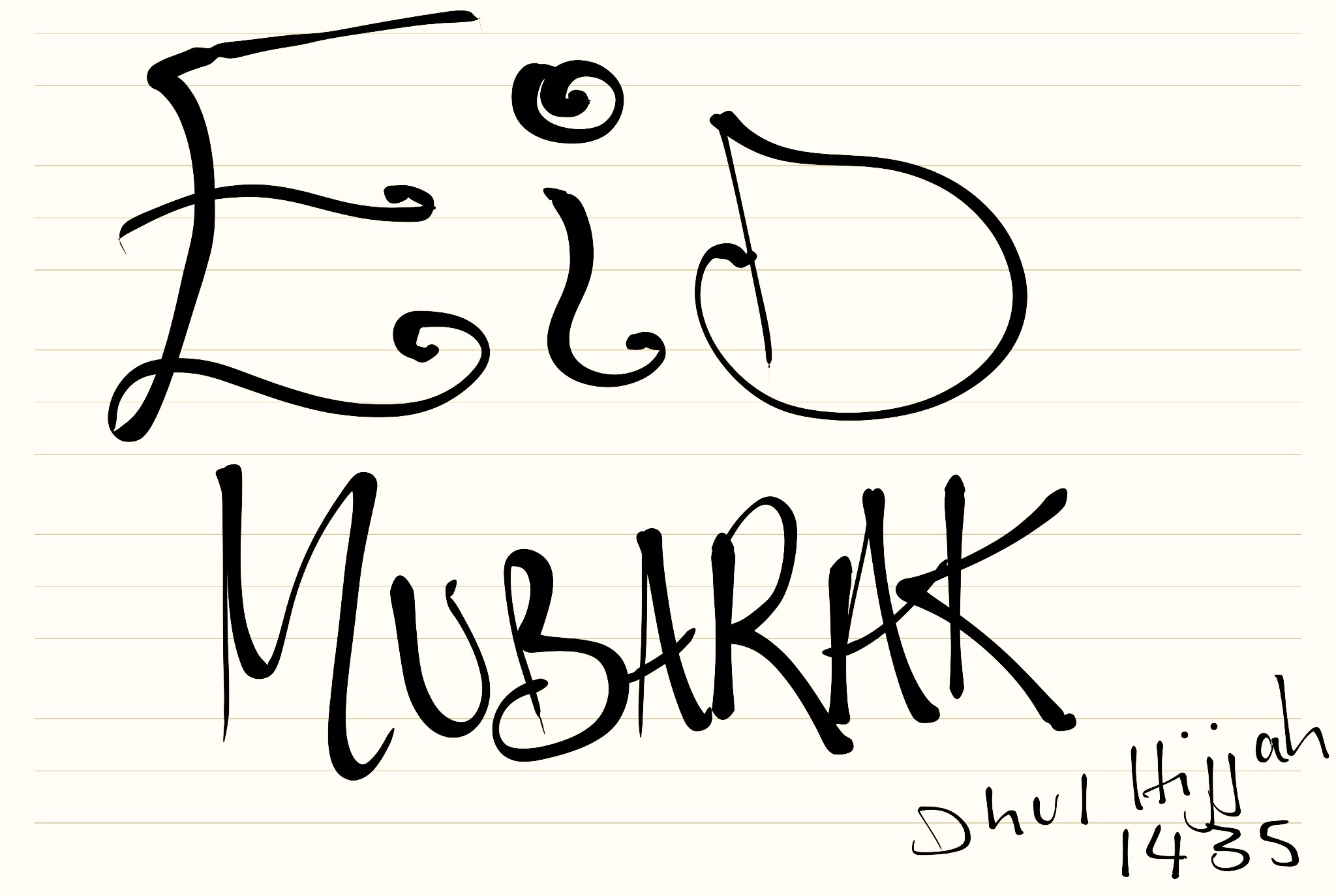 Please take a few moments for the sake of Allah to discover the obligations, sunnahs and etiquettes of Eid-ul-adhaa:
The etiquettes of Eid, the takbeer etc.
Some top tips (see above links for references from Qur’an and sunnah):
1- Do make an arrangement immediately to offer the udhiyah, if you have not done so already. You can do it for as little as £35 or more with various Islamic charities in the UK, in sha Allah. Let us offer sacrificial animals in obedience to Allah, following the way of His final prophet Muhammad peace be upon him. Let’s share this bounty with our brothers and sisters around the world, in sha Allah!
2- Keep pronouncing the Takbeer, this is a great Sunnah! Remind each other! (starts on 1st Dhul Hijjah until sunset on the last of the days of Tashreeq, i.e. 13th Dhul Hijjah.)
The Takbeer is:
Allahu Akbar, Allahu akbar, Allahu Akbar, laa ilaha illAllah, Allahu Akbar, Allahu Akbar, Allahu Akbar, wa lillaahilHamd. (Allah is Most Great, Allah is Most Great, Allah is Most Great, There is no true god worthy of worship, except Allah. Allah is Most Great, Allah is Most Great, Allah is Most Great and all praise be to Allah.)
3-Have ghusl in the morning before going out to pray
4- If possible, make an effort to delay eating until after the Eid salah and eat from the udhiyah if you offered a sacrifice.
5- Men should go out wearing their finest clothes, perfume etc.When going out or in the presence of non-mahram men, women should avoid perfume. Women can wear their fine clothes so long as it is concealed by a full and complete, unadorned Hijab. When in female only environments, or among their mahram relatives, women may adorn themselves appropriately. My dear readers, let us remind ourselves that obedience to Allah takes precedence over all else.
6- Pray the Eid prayer in congregation
7- Congratulate one another! Taqabbal Allahu minnaa wa minkum (May Allah accept (the fast and worship) from us and from you)
8- Go out to pray one route, and return by another. Check out the links above for more!
Pray for us and share for the sake of Allah!
May Allah forgive us, for He is the Perpetual Forgiver.
Thurrock Muslims
In the name of Allah, the Most Gracious, The Most Merciful
Virtues of the Ten Days of Dhul Hijjah
How do the first ten days of the Month of Dhul Hijjah differ from other days of the year?
Adapted from Sheikh Salih Al Munajjid, IslamQA
Praise be to Allaah Who has created Time and has made some times better than others, some months and days and nights better than others, when rewards are multiplied many times, as a mercy towards His slaves. This encourages them to do more righteous deeds and makes them more eager to worship Him, so that the Muslim renews his efforts to gain a greater share of reward, prepare himself for death and supply himself in readiness for the Day of Judgement
 This season of worship brings many benefits, such as the opportunity to correct one’s faults and make up for any shortcomings or anything that one might have missed. Every one of these special occasions involves some kind of worship through which the slaves may draw closer to Allaah, and some kind of blessing though which Allaah bestows His favour and mercy upon whomsoever He will. The happy person is the one who makes the most of these special months, days and hours and draws nearer to his Lord during these times through acts of worship; he will most likely be touched by the blessing of Allaah and will feel the joy of knowing that he is safe from the flames of Hell. (Ibn Rajab, al-Lataa’if, p.8)
The Muslim must understand the value of his life, increase his worship of Allaah and persist in doing good deeds until the moment of death. Allaah says (interpretation of the meaning):
“And worship your Lord until there comes unto you the certainty.” [al-Hijr 15:99]
The mufassireen (commentators) said: “‘The certainty’ means death.”
Among the special seasons of worship are the first ten days of Dhu’l-Hijjah, which Allaah has preferred over all the other days of the year. Ibn ‘Abbaas (may Allaah be pleased with him and his father) reported that the Prophet (peace and blessings of Allaah be upon him) said: “There are no days in which righteous deeds are more beloved to Allaah than these ten days.” The people asked, “Not even jihaad for the sake of Allaah?” He said, “Not even jihaad for the sake of Allaah, except in the case of a man who went out to fight giving himself and his wealth up for the cause, and came back with nothing.” (Reported by al-Bukhaari, 2/457).
Ibn ‘Abbaas (may Allaah be pleased with him and his father) also reported that the Prophet (peace and blessings of Allaah be upon him) said: “There is no deed more precious in the sight of Allaah, nor greater in reward, than a good deed done during the ten days of Sacrifice.” He was asked, “Not even jihaad for the sake of Allaah?” He said, “Not even jihaad for the sake of Allaah, except in the case of a man who went out to fight giving himself and his wealth up for the cause, and came back with nothing.” (Reported by al-Daarimi, 1/357; itsisnaad is hasan as stated in al-Irwaa’, 3/398).
These texts and others indicate that these ten days are better than all the other days of the year, with no exceptions, not even the last ten days of Ramadaan. But the last ten nights of Ramadaan are better, because they include Laylat al-Qadr (“the Night of Power”), which is better than a thousand months. Thus the various reports may be reconciled. (See Tafseer Ibn Katheer, 5/412).

You should know, my brothers and sisters in Islaam, that the virtue of these ten days is based on many things:
2. The Prophet (peace and blessings of Allaah be upon him) testified that these are the best days of this world, as we have already quoted above from saheeh ahaadeeth.
3.The Prophet (peace and blessings of Allaah be upon him) encouraged people to do righteous deeds because of the virtue of this season for people throughout the world, and also because of the virtue of the place – for the Hujjaaj (pilgrims) to the Sacred House of Allaah.
4.The Prophet (peace and blessings of Allaah be upon him) commanded us to recite a lot of Tasbeeh (“Subhan-Allaah“),Tahmeed (“Al-hamdu Lillaah“) and Takbeer (“Allaahu akbar“) during this time. ‘Abdullaah ibn ‘Umar (may Allaah be pleased with him and his father) reported that the Prophet (peace and blessings of Allaah be upon him) said: “There are no days greater in the sight of Allaah and in which righteous deeds are more beloved to Him than these ten days, so during this time recite a great deal of Tahleel (“La ilaaha ill-Allaah“), Takbeerand Tahmeed.” (Reported by Ahmad, 7/224; Ahmad Shaakir stated that it is saheeh).
5.These ten days include Yawm ‘Arafaah (the Day of ‘Arafaah), on which Allaah perfected His Religion. Fasting on this day will expiate for the sins of two years. These days also includeYawm al-Nahar (the Day of Sacrifice), the greatest day of the entire year and the greatest day of Hajj, which combines acts of worship in a way unlike any other day.
6.These ten days include the days of sacrifice and of Hajj.
Question: What must the Muslim avoid during these ten days if he wants to offer a sacrifice?
The Sunnah indicates that the one who wants to offer a sacrifice must stop cutting his hair and nails and removing anything from his skin, from the beginning of the ten days until after he has offered his sacrifice, because the Prophet (peace and blessings of Allaah be upon him) said: “When you see the new moon of Dhu’l-Hijjah, if any one of you wants to offer a sacrifice, then he should stop cutting his hair and nails until he has offered his sacrifice.” According to another report he said: “He should not remove (literally, touch) anything from his hair or skin.” (reported by Muslim with four isnaads, 13/146)
The Prophet’s instruction here makes one thing obligatory and his prohibition makes another haraam, according to the soundest opinion, because these commands and prohibitions are unconditional and unavoidable. However, if a person does any of these things deliberately, he must seek Allaah’s forgiveness but is not required to offer (an extra) sacrifice in expiation; his sacrifice will be acceptable. Whoever needs to remove some hair, nails, etc. because it is harming him, such as having a broken nail or a wound in a site where there is hair, should do so, and there is nothing wrong with that. The state of ihraam is so important that it is permitted to cut one’s hair if leaving it will cause harm. There is nothing wrong with men or women washing their heads during the first ten days of Dhu’l-Hijjah, because the Prophet (peace and blessings of Allaah be upon him) only forbade cutting the hair, not washing it.
The wisdom behind this prohibition of the one who wants to offer a sacrifice from cutting his hair etc., is so that he may resemble those in ihraam in some aspects of the rituals performed, and so that he may draw closer to Allaah by offering the sacrifice. So he leaves his hair and nails alone until the time when he has offered his sacrifice, in the hope that Allaah will save him in his entirety from the Fire. And Allaah knows best.
If a person has cut his hair or nails during the first ten days of Dhu’l-Hijjah because he was not planning to offer a sacrifice, then he decides later, during the ten days, to offer a sacrifice, then he must refrain from cutting his hair and nails from the moment he makes this decision.
Some women may delegate their brothers or sons to make the sacrifice on their behalf, then cut their hair during these ten days. This is not correct, because the ruling applies to the one who is offering the sacrifice, whether or not he (or she) delegates someone else to carry out the actual deed. The prohibition does not apply to the person delegated, only to the person who is making the sacrifice, as is indicated in the hadeeth. The person who is sacrificing on behalf of someone else, for whatever reason, does not have to adhere to this prohibition.
This prohibition appears to apply only to the one who is offering the sacrifice, not to his wife and children, unless any of them is offering a sacrifice in his or her own right, because the Prophet (peace and blessings of Allaah be upon him) used to sacrifice “on behalf of the family of Muhammad,” but there are no reports that say he forbade them to cut their hair or nails at that time.
If a person was planning to offer a sacrifice, then he decides to go and perform Hajj, he should not cut his hair or nails if he wants to enter ihraam, because the Sunnah is only to cut hair and nails when necessary. But if he is performing Tamattu’ [whereby he performs ‘Umrah, comes out of ihraam and enters ihraam anew for Hajj], he should trim his hair at the end of his ‘Umrah because this is part of the ritual.
The things that are described above as being prohibited for the person who is planning to offer a sacrifice are reported in the hadeeth quoted above; the person is not forbidden to wear perfume, have marital relations, wear sewn garments, etc.
Concerning the types of worship to be performed during these ten days: one must understand that these days are a great blessing from Allaah to His slave, which is appreciated properly by the actively righteous. It is the Muslim’s duty to appreciate this blessing and make the most of the opportunity, by devoting these ten days to paying more attention to striving hard in worship. Among His blessings to His slaves, Allaah has given us many ways in which to do good and worship Him, so that the Muslim may be constantly active and consistent in his worship of his Lord.
Among the good deeds which the Muslim should strive to do during the first ten days of Dhu’l-Hijjah are:
Allaah says (interpretation of the meaning):
“That they might witness things that are of benefit to them (i.e., reward of Hajj in the Hereafter, and also some worldly gain from trade, etc.), and mention the name of Allaah on appointed days, over the beast of cattle that He has provided for them (for sacrifice)…” [al-Hajj 22:28]
The majority of scholars agree that the “appointed days” are the first ten days of Dhu’l-Hijjah, because of the words of Ibn ‘Abbaas (may Allaah be pleased with him and his father): “The ‘appointed days’ are the first ten days (of Dhu’l-Hijjah).”
The Takbeer may include the words “Allaahu akbar, Allaahu akbar, la ilaaha ill-Allaah; wa Allaahu akbar wa Lillaahi’l-hamd(Allaah is Most Great, Allaah is Most Great, there is no god but Allaah; Allaah is Most Great and to Allaah be praise),” as well as other phrases.
Takbeer at this time is an aspect of the Sunnah that has been forgotten, especially during the early part of this period, so much so that one hardly ever hears Takbeer, except from a few people. This Takbeer should be pronounced loudly, in order to revive the Sunnah and as a reminder to the negligent. There is sound evidence that Ibn ‘Umar and Abu Hurayrah (may Allaah be pleased with them) used to go out in the marketplace during the first ten days of Dhu’l-Hijjah, reciting Takbeer, and the people would recite Takbeer when they heard them. The idea behind reminding the people to recite Takbeer is that each one should recite it individually, not in unison, as there is no basis in Sharee’ah for doing this.
Reviving aspects of the Sunnah that have been virtually forgotten is a deed that will bring an immense reward, as is indicated by the words of the Prophet (peace and blessings of Allaah be upon him): “Whoever revives an aspect of my Sunnah that is forgotten after my death, he will have a reward equivalent to that of the people who follow him, without it detracting in the least from their reward.” (Reported by al-Tirmidhi, 7/443; this is a hasan hadeeth because of corroborating asaaneed).
3. Performing Hajj and ‘Umrah. One of the best deeds that one can do during these ten days is to perform Hajj to the Sacred House of Allaah. The one whom Allaah helps to go on Hajj to His House and to perform all the rituals properly is included in the words of the Prophet (peace and blessings of Allaah be upon him): “An accepted Hajj brings no less a reward than Paradise.
4.Doing more good deeds in general, because good deeds are beloved by Allaah and will bring a great reward from Him. Whoever is not able to go to Hajj should occupy himself at this blessed time by worshipping Allaah, praying (salaat), reading Qur’an, remembering Allaah, making supplication (du’aa’), giving charity, honouring his parents, upholding the ties of kinship, enjoining what is good and forbidding what is evil, and other good deeds and acts of worship.
5.Sacrifice. One of the good deeds that will bring a person closer to Allaah during these ten days is offering a sacrifice, by choosing a high-quality animal and fattening it, spending money for the sake of Allaah.
6. Sincere repentance. One of the most important things to do during these ten days is to repent sincerely to Allaah and to give up all kinds of disobedience and sin. Repentance means coming back to Allaah and foregoing all the deeds, open and secret, that He dislikes, out of regret for what has passed, giving it up immediately and being determined never to return to it, but to adhere firmly to the Truth by doing what Allaah loves.
If a Muslim commits a sin, he must hasten to repent at once, without delay, firstly because he does not know when he will die, and secondly because one evil deed leads to another.
Repentance at special times is very important because in most cases people’s thoughts turn towards worship at these times, and they are keen to do good, which leads to them recognizing their sins and feeling regret for the past. Repentance is obligatory at all times, but when the Muslim combines sincere repentance with good deeds during the days of most virtue, this is a sign of success, in sha Allaah. Allaah says (interpretation of the meaning): “But as for him who repented, believed and did righteous deeds, then he will be among those who are successful.” [al-Qasas 28:67]
The Muslim should make sure that he does not miss any of these important occasion, because time is passing quickly. Let him prepare himself by doing good deeds which will bring him reward when he is most in need of it, for no matter how much reward he earns, he will find it is less than he needs; the time of departure is at hand, the journey is frightening, delusions are widespread, and the road is long, but Allaah is ever watchful, and to Him will we return and render account. As the Qur’aan says (interpretation of the meaning):
“So whosoever does good equal to the weight of an atom, shall see it,
And whosoever does evil equal to the weight of an atom, shall see it.”
[Qur’an , al-Zalzalah 99:7-8]
There is much to be gained, so make the most of the opportunity afforded by these invaluable and irreplaceable ten days. Hasten to do good works, before death strikes, before one can regret one’s negligence and failure to act, before one is asked to return to a place where no prayers will be answered, before death intervenes between the hopeful one and the things he hopes for, before you are trapped with your deeds in the grave.
O you whose hard heart is as dark as the night, is it not time that your heart was filled with light and became soft? Expose yourself to the gentle breeze of your Lord’s mercy during these ten days, for Allaah will cause this breeze to touch whomever He wills, and whoever is touched by it will be happy on the Day of Judgement. May Allaah bless our Prophet Muhammad and all his Family and Companions.
May Allah the Most Merciful, The Real Bestower help us to implement beneficial knowledge for His pleasure alone. ameen.
Bismillah, walhamdulillah, wassaalatu wassalaam alaa Rasoolillah
Asalamu alaykum warahmatullah!
Dear beloved readers, thank you for joining us once again.
Todays Islamic creed (Aqidah) Lesson will expand on the previous one.
We will go into a bit more detail regarding the categories of analysis of Tawhid and Islamic Monotheism.
Categories of Analysis of Tawhid
1- Tawhid- ar-Rububiyyah- (Oneness of Allah in His Lordship).
¬ This means we affirm and understand that Allah is the Only Supreme Creator of all that exists.
¬ Allah is the uncreated, Ever-Living, Self-Existing, Self-Subsisting Creator, The Lord of the Worlds
¬ Allah is The Provider, The Sustainer, The Protector. There is no power nor strength except with Allah.
¬ Allah is the King of absolute sovereignty, He owns everything. He is The One, the dominion is His alone and He has no rival nor partner.
¬ He decrees with perfect wisdom. He is the Subduer, The Dominator, The All-powerful, and He has absolute control over the universe and its affairs. And His Justice and wisdom are perfect.
And Allah knows best!

In the name of Allah.
Asalamu alaykum dear readers.
On this beautiful day of Jumu’ah, which corresponds to the 3rd Dhul Qad’ah 1435, we would like to remind ourselves about the importance of the four sacred months in Islam. They are Rajab, Dhul Qad’ah, Dhul Hijjah and Muharram, the 7th, 11th, 12th and 1st month of the Islamic Hijri calander respectively. (see Surah Tawbah, Qur’an chapter 9 verse 36). Hear Dr Muhammad Salah clarify things for us:
Don’t forget to make dua on Friday!
May Allah forgive us, be merciful to us and guide us, for He is the Most Gracious the Most Merciful, The Ever-Relenting. Allah bless His final messenger Muhammad ibn Abdillah in abundance. amin
Thurrock Muslims
Dear Reader,
You are reading this today, for a reason.
I want you to give me your answer to the question:
What is the purpose in life?
Write it down. Make a list if you want. Now scroll down to see what you may have come up with…
These things are accepted by many as common pursuits of life. But are they really the purpose of our existence? Does failure to attain these imply that it’s not worth living anymore? Are people who cannot attain these worthless?
Let’s get real. Sure everyone wants to be happy, but sometimes we become sad. Does that mean we shouldn’t bother living anymore? No! Of course not!
The same can be said about having fun, life’s not always fun, is it? I’m just being honest.
Money…so what happens when you go broke? What about those in poverty or unable to earn?
And about looking good… well, define good-looking for a start… and then decide, is beauty and youth everlasting, or ephemeral? (Botox does not count, those who’ve been there and done that can tell you all about it!)
The same about everything else on that list. You may have it, you may lose it, you may never attain it, and if you do, it will not last forever. Ultimately, we do have an end. Agreed? That’s a nod.
So then, all these things are ephemeral pursuits in life. What’s more, they may not be attainable to everyone. But that doesn’t mean it’s not worth living. Because life has meaning. It’s got to be far deeper than merely getting by before you die.
What is the purpose of life?!
Quite simply, this is the very question which many have failed to answer adequately.
But when the answer comes from the Supreme Creator of all existence, things become a whole lot clearer.
As Muslims, we believe in One Supreme Creator of the universe and all existence. You may say God, we prefer to use Allah- you can’t add gender or plurals to the latter.
Allah is The Supreme Creator of all. Everything has a beginning and an end. But Allah is The Ever-Living, The Self-Existing, The Originator. Allah created you and me, and everything. Allah owns everything, including you and me. We belong to Allah. And we will return to Allah soon…
Allah informs us that we were created for a purpose, and that purpose is to worship none but Allah alone, without partners or associates.
“and I (Allah) created not the jinn and mankind except that they should worship me (alone). [Qur’an, chapter 51: verse 56 (English interpretation of Arabic)]
I haven’t finished this letter yet. Thanks for your time though, I’m going to have to continue it soon, if Allah wills…
Just stunning!
ALLAHUAKBAR!
Sheikh Salih At-Taalib leads the ‘Isha salah, Ramadaan 1435 1st night.
 Thurrock Muslim Community