
KEEP US IN YOUR KIND DUAS 🙂
ALLAH ACCEPT OUR IBADAH AND FORGIVE OUR SINS.
In the name of Allah, the Most Gracious, The Most Merciful
Best Ten Days of the Year…6 Things You Need to Know NOW
Before Dhul Hijjah starts (in a few days), let’s get prepared. Find out about sacrifice/udhiyah/qurbani, Hajj, virtuous deeds, fasting and fasting on the day of Arafah, the takbeer, and much more!
Keep us in your duas, especially those going for Hajj 🙂
Virtues of the Ten Days of Dhul Hijjah
How do the first ten days of the Month of Dhul Hijjah differ from other days of the year?
Adapted from Sheikh Salih Al Munajjid, IslamQA.info
Praise be to Allaah Who has created Time and has made some times better than others, some months and days and nights better than others, when rewards are multiplied many times, as a mercy towards His slaves. This encourages them to do more righteous deeds and makes them more eager to worship Him, so that the Muslim renews his efforts to gain a greater share of reward, prepare himself for death and supply himself in readiness for the Day of Judgement
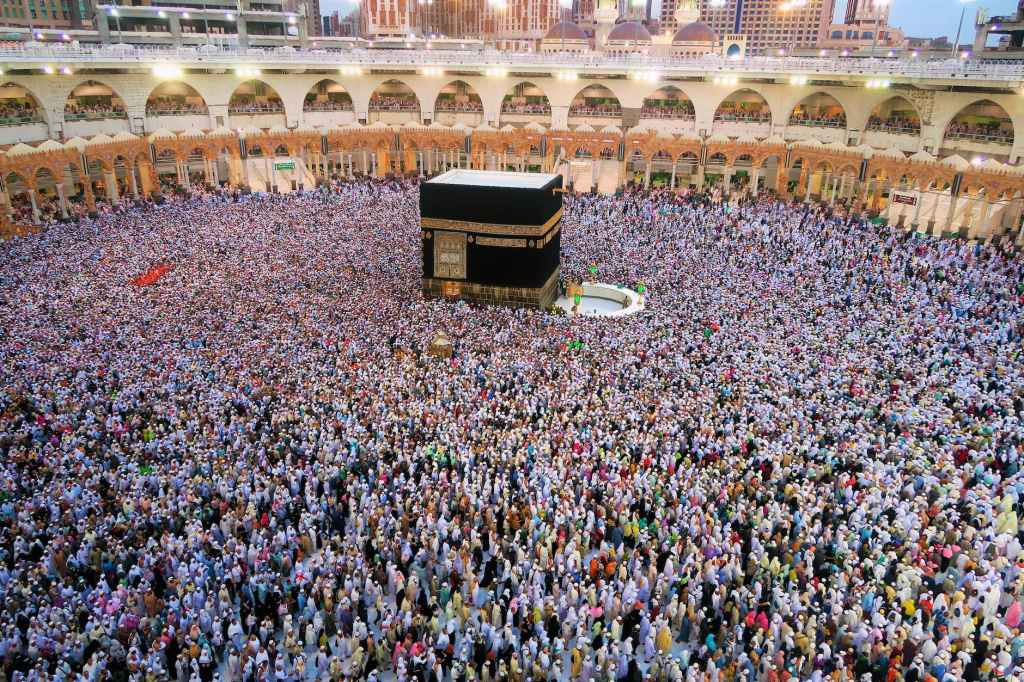
This season of worship brings many benefits, such as the opportunity to correct one’s faults and make up for any shortcomings or anything that one might have missed. Every one of these special occasions involves some kind of worship through which the slaves may draw closer to Allaah, and some kind of blessing though which Allaah bestows His favour and mercy upon whomsoever He will. The happy person is the one who makes the most of these special months, days and hours and draws nearer to his Lord during these times through acts of worship; he will most likely be touched by the blessing of Allaah and will feel the joy of knowing that he is safe from the flames of Hell. (Ibn Rajab, al-Lataa’if, p.8)
The Muslim must understand the value of his life, increase his worship of Allaah and persist in doing good deeds until the moment of death. Allaah says (interpretation of the meaning):
“And worship your Lord until there comes unto you the certainty.” [al-Hijr 15:99]
The mufassireen (commentators) said: “‘The certainty’ means death.”
Among the special seasons of worship are the first ten days of Dhu’l-Hijjah, which Allaah has preferred over all the other days of the year. Ibn ‘Abbaas (may Allaah be pleased with him and his father) reported that the Prophet (peace and blessings of Allaah be upon him) said: “There are no days in which righteous deeds are more beloved to Allaah than these ten days.” The people asked, “Not even jihaad for the sake of Allaah?” He said, “Not even jihaad for the sake of Allaah, except in the case of a man who went out to fight giving himself and his wealth up for the cause, and came back with nothing.” (Reported by al-Bukhaari, 2/457).
Ibn ‘Abbaas (may Allaah be pleased with him and his father) also reported that the Prophet (peace and blessings of Allaah be upon him) said: “There is no deed more precious in the sight of Allaah, nor greater in reward, than a good deed done during the ten days of Sacrifice.” He was asked, “Not even jihaad for the sake of Allaah?” He said, “Not even jihaad for the sake of Allaah, except in the case of a man who went out to fight giving himself and his wealth up for the cause, and came back with nothing.” (Reported by al-Daarimi, 1/357; itsisnaad is hasan as stated in al-Irwaa’, 3/398).
These texts and others indicate that these ten days are better than all the other days of the year, with no exceptions, not even the last ten days of Ramadaan. But the last ten nights of Ramadaan are better, because they include Laylat al-Qadr (“the Night of Power”), which is better than a thousand months. Thus the various reports may be reconciled. (See Tafseer Ibn Katheer, 5/412).

You should know, my brothers and sisters in Islaam, that the virtue of these ten days is based on many things:
2. The Prophet (peace and blessings of Allaah be upon him) testified that these are the best days of this world, as we have already quoted above from saheeh ahaadeeth.
3.The Prophet (peace and blessings of Allaah be upon him) encouraged people to do righteous deeds because of the virtue of this season for people throughout the world, and also because of the virtue of the place – for the Hujjaaj (pilgrims) to the Sacred House of Allaah.
4.The Prophet (peace and blessings of Allaah be upon him) commanded us to recite a lot of Tasbeeh (“Subhan-Allaah“),Tahmeed (“Al-hamdu Lillaah“) and Takbeer (“Allaahu akbar“) during this time. ‘Abdullaah ibn ‘Umar (may Allaah be pleased with him and his father) reported that the Prophet (peace and blessings of Allaah be upon him) said: “There are no days greater in the sight of Allaah and in which righteous deeds are more beloved to Him than these ten days, so during this time recite a great deal of Tahleel (“La ilaaha ill-Allaah“), Takbeerand Tahmeed.” (Reported by Ahmad, 7/224; Ahmad Shaakir stated that it is saheeh).
5.These ten days include Yawm ‘Arafaah (the Day of ‘Arafaah), on which Allaah perfected His Religion. Fasting on this day will expiate for the sins of two years. These days also includeYawm al-Nahar (the Day of Sacrifice), the greatest day of the entire year and the greatest day of Hajj, which combines acts of worship in a way unlike any other day.
6.These ten days include the days of sacrifice and of Hajj.
Question: What must the Muslim avoid during these ten days if he wants to offer a sacrifice?
The Sunnah indicates that the one who wants to offer a sacrifice must stop cutting his hair and nails and removing anything from his skin, from the beginning of the ten days until after he has offered his sacrifice, because the Prophet (peace and blessings of Allaah be upon him) said: “When you see the new moon of Dhu’l-Hijjah, if any one of you wants to offer a sacrifice, then he should stop cutting his hair and nails until he has offered his sacrifice.” According to another report he said: “He should not remove (literally, touch) anything from his hair or skin.” (reported by Muslim with four isnaads, 13/146)
The Prophet’s instruction here makes one thing obligatory and his prohibition makes another haraam, according to the soundest opinion, because these commands and prohibitions are unconditional and unavoidable. However, if a person does any of these things deliberately, he must seek Allaah’s forgiveness but is not required to offer (an extra) sacrifice in expiation; his sacrifice will be acceptable. Whoever needs to remove some hair, nails, etc. because it is harming him, such as having a broken nail or a wound in a site where there is hair, should do so, and there is nothing wrong with that. The state of ihraam is so important that it is permitted to cut one’s hair if leaving it will cause harm. There is nothing wrong with men or women washing their heads during the first ten days of Dhu’l-Hijjah, because the Prophet (peace and blessings of Allaah be upon him) only forbade cutting the hair, not washing it.
The wisdom behind this prohibition of the one who wants to offer a sacrifice from cutting his hair etc., is so that he may resemble those in ihraam in some aspects of the rituals performed, and so that he may draw closer to Allaah by offering the sacrifice. So he leaves his hair and nails alone until the time when he has offered his sacrifice, in the hope that Allaah will save him in his entirety from the Fire. And Allaah knows best.
If a person has cut his hair or nails during the first ten days of Dhu’l-Hijjah because he was not planning to offer a sacrifice, then he decides later, during the ten days, to offer a sacrifice, then he must refrain from cutting his hair and nails from the moment he makes this decision.
Some women may delegate their brothers or sons to make the sacrifice on their behalf, then cut their hair during these ten days. This is not correct, because the ruling applies to the one who is offering the sacrifice, whether or not he (or she) delegates someone else to carry out the actual deed. The prohibition does not apply to the person delegated, only to the person who is making the sacrifice, as is indicated in the hadeeth. The person who is sacrificing on behalf of someone else, for whatever reason, does not have to adhere to this prohibition.
This prohibition appears to apply only to the one who is offering the sacrifice, not to his wife and children, unless any of them is offering a sacrifice in his or her own right, because the Prophet (peace and blessings of Allaah be upon him) used to sacrifice “on behalf of the family of Muhammad,” but there are no reports that say he forbade them to cut their hair or nails at that time.
If a person was planning to offer a sacrifice, then he decides to go and perform Hajj, he should not cut his hair or nails if he wants to enter ihraam, because the Sunnah is only to cut hair and nails when necessary. But if he is performing Tamattu’ [whereby he performs ‘Umrah, comes out of ihraam and enters ihraam anew for Hajj], he should trim his hair at the end of his ‘Umrah because this is part of the ritual.
The things that are described above as being prohibited for the person who is planning to offer a sacrifice are reported in the hadeeth quoted above; the person is not forbidden to wear perfume, have marital relations, wear sewn garments, etc.
Concerning the types of worship to be performed during these ten days: one must understand that these days are a great blessing from Allaah to His slave, which is appreciated properly by the actively righteous. It is the Muslim’s duty to appreciate this blessing and make the most of the opportunity, by devoting these ten days to paying more attention to striving hard in worship. Among His blessings to His slaves, Allaah has given us many ways in which to do good and worship Him, so that the Muslim may be constantly active and consistent in his worship of his Lord.
Among the good deeds which the Muslim should strive to do during the first ten days of Dhu’l-Hijjah are:
Allaah says (interpretation of the meaning):
“That they might witness things that are of benefit to them (i.e., reward of Hajj in the Hereafter, and also some worldly gain from trade, etc.), and mention the name of Allaah on appointed days, over the beast of cattle that He has provided for them (for sacrifice)…” [al-Hajj 22:28]
The majority of scholars agree that the “appointed days” are the first ten days of Dhu’l-Hijjah, because of the words of Ibn ‘Abbaas (may Allaah be pleased with him and his father): “The ‘appointed days’ are the first ten days (of Dhu’l-Hijjah).”
The Takbeer may include the words “Allaahu akbar, Allaahu akbar, la ilaaha ill-Allaah; wa Allaahu akbar wa Lillaahi’l-hamd(Allaah is Most Great, Allaah is Most Great, there is no god but Allaah; Allaah is Most Great and to Allaah be praise),” as well as other phrases.
Takbeer at this time is an aspect of the Sunnah that has been forgotten, especially during the early part of this period, so much so that one hardly ever hears Takbeer, except from a few people. This Takbeer should be pronounced loudly, in order to revive the Sunnah and as a reminder to the negligent. There is sound evidence that Ibn ‘Umar and Abu Hurayrah (may Allaah be pleased with them) used to go out in the marketplace during the first ten days of Dhu’l-Hijjah, reciting Takbeer, and the people would recite Takbeer when they heard them. The idea behind reminding the people to recite Takbeer is that each one should recite it individually, not in unison, as there is no basis in Sharee’ah for doing this.
Reviving aspects of the Sunnah that have been virtually forgotten is a deed that will bring an immense reward, as is indicated by the words of the Prophet (peace and blessings of Allaah be upon him): “Whoever revives an aspect of my Sunnah that is forgotten after my death, he will have a reward equivalent to that of the people who follow him, without it detracting in the least from their reward.” (Reported by al-Tirmidhi, 7/443; this is a hasan hadeeth because of corroborating asaaneed).
3. Performing Hajj and ‘Umrah. One of the best deeds that one can do during these ten days is to perform Hajj to the Sacred House of Allaah. The one whom Allaah helps to go on Hajj to His House and to perform all the rituals properly is included in the words of the Prophet (peace and blessings of Allaah be upon him): “An accepted Hajj brings no less a reward than Paradise.
4.Doing more good deeds in general, because good deeds are beloved by Allaah and will bring a great reward from Him. Whoever is not able to go to Hajj should occupy himself at this blessed time by worshipping Allaah, praying (salaat), reading Qur’an, remembering Allaah, making supplication (du’aa’), giving charity, honouring his parents, upholding the ties of kinship, enjoining what is good and forbidding what is evil, and other good deeds and acts of worship.
5.Sacrifice. One of the good deeds that will bring a person closer to Allaah during these ten days is offering a sacrifice, by choosing a high-quality animal and fattening it, spending money for the sake of Allaah.
6. Sincere repentance. One of the most important things to do during these ten days is to repent sincerely to Allaah and to give up all kinds of disobedience and sin. Repentance means coming back to Allaah and foregoing all the deeds, open and secret, that He dislikes, out of regret for what has passed, giving it up immediately and being determined never to return to it, but to adhere firmly to the Truth by doing what Allaah loves.
If a Muslim commits a sin, he must hasten to repent at once, without delay, firstly because he does not know when he will die, and secondly because one evil deed leads to another.
Repentance at special times is very important because in most cases people’s thoughts turn towards worship at these times, and they are keen to do good, which leads to them recognizing their sins and feeling regret for the past. Repentance is obligatory at all times, but when the Muslim combines sincere repentance with good deeds during the days of most virtue, this is a sign of success, in sha Allaah. Allaah says (interpretation of the meaning): “But as for him who repented, believed and did righteous deeds, then he will be among those who are successful.” [al-Qasas 28:67]
The Muslim should make sure that he does not miss any of these important occasion, because time is passing quickly. Let him prepare himself by doing good deeds which will bring him reward when he is most in need of it, for no matter how much reward he earns, he will find it is less than he needs; the time of departure is at hand, the journey is frightening, delusions are widespread, and the road is long, but Allaah is ever watchful, and to Him will we return and render account. As the Qur’aan says (interpretation of the meaning):
“So whosoever does good equal to the weight of an atom, shall see it,
And whosoever does evil equal to the weight of an atom, shall see it.”
[Qur’an , al-Zalzalah 99:7-8]
There is much to be gained, so make the most of the opportunity afforded by these invaluable and irreplaceable ten days. Hasten to do good works, before death strikes, before one can regret one’s negligence and failure to act, before one is asked to return to a place where no prayers will be answered, before death intervenes between the hopeful one and the things he hopes for, before you are trapped with your deeds in the grave.
Expose yourself to the gentle breeze of your Lord’s mercy during these ten days, for Allaah will cause this breeze to touch whomever He wills, and whoever is touched by it will be happy on the Day of Judgement. May Allaah bless our Prophet Muhammad and all his Family and Companions.
May Allah the Most Merciful, The Real Bestower help us to implement beneficial knowledge for His pleasure alone. ameen.
ThurrockMuslims.com
See disclaimer
Supported by

about/disclaimer
IN THE NAME OF ALLAH
VIRTUES OF THE FIRST 10 DAYS OF DHUL HIJJAH! [SACRIFICE]
QURBANI/UDHIYAH- SACRIFICING AN ANIMAL IN OBEDIENCE TO ALLAH
Check out the previous post with some amazing tips on how to make the best of these 10 days
Want to know what udhiyah/Qurbani is? Read this:
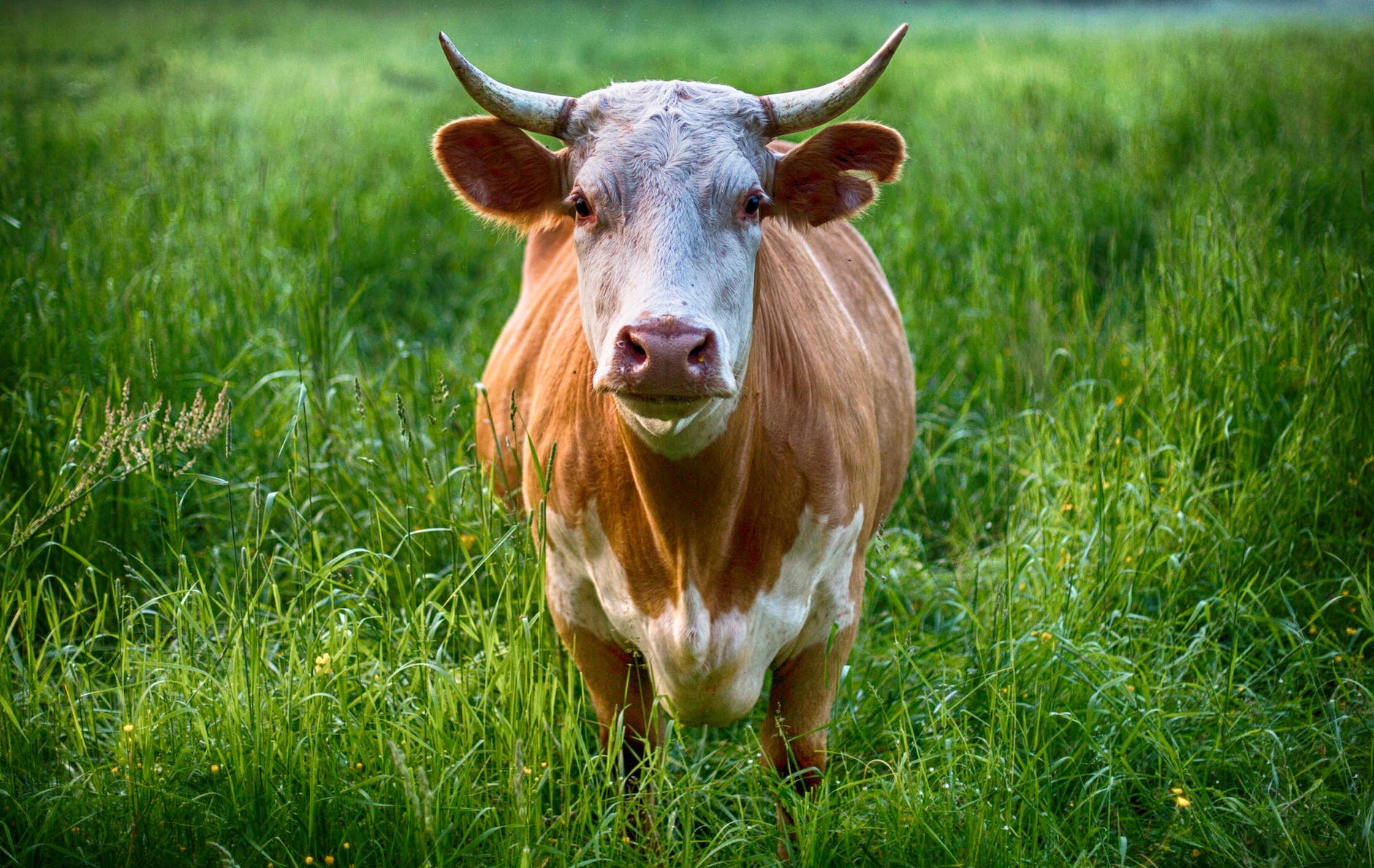
What is meant by udhiyah (sacrifice)? Is it obligatory or Sunnah?.
Praise be to Allaah.
The word udhiyah means an animal of the ‘an’aam class (i.e., camel, cow, sheep or goat) that is slaughtered during the days of Eid al-Adha because of the Eid and as an act of worship, intending to draw closer to Allaah thereby.
This is one of the rituals of Islam prescribed in the Book of Allaah and the Sunnah of His Messenger (peace and blessings of Allaah be upon him), and according to the consensus of the Muslims.
In the Qur’aan:
1 – Allaah says (interpretation of the meaning):
“Therefore turn in prayer to your Lord and sacrifice (to Him only)”
[al-Kawthar 108:2]
2 – Allaah says (interpretation of the meaning):
“Say (O Muhammad): Verily, my Salaah (prayer), my sacrifice, my living, and my dying are for Allaah, the Lord of the ‘Aalameen (mankind, jinn and all that exists).
He has no partner. And of this I have been commanded, and I am the first of the Muslims”
[al-An’aam 6:162]
The word nusuk (translated here as sacrifice) means sacrifice; this is the view of Sa’eed ibn Jubayr. And it was said that it means all acts of worship, including sacrifice, which is more comprehensive.
3 – Allaah says (interpretation of the meaning):
“And for every nation We have appointed religious ceremonies, that they may mention the Name of Allaah over the beast of cattle that He has given them for food. And your Ilaah (God) is One Ilaah (God Allaah), so you must submit to Him Alone (in Islam). And (O Muhammad) give glad tidings to the Mukhbitoon [those who obey Allaah with humility and are humble from among the true believers of Islamic Monotheism]”
[al-Hajj 22:34]
In the Sunnah:
1 – It was narrated in Saheeh al-Bukhaari (5558) and Saheeh Muslim (1966) that Anas ibn Maalik (may Allaah be pleased with him) said: “The Prophet (peace and blessings of Allaah be upon him) sacrificed two white rams speckled with black. He slaughtered them with his own hand, said ‘Allaahu akbar’ and put his foot on their necks.”
2 – It was narrated that ‘Abd-Allaah ibn ‘Umar (may Allaah be pleased with him) said: “The Prophet (peace and blessings of Allaah be upon him) stayed in Madeenah for ten years, offering sacrifice (every year on Eid).” Narrated by Ahmad, 4935; al-Tirmidhi, 1507; classed as hasan by al-Albaani in Mishkaat al-Masaabeeh, 1475.
3 – It was narrated from ‘Uqbah ibn ‘Aamir (may Allaah be pleased with him) that the Prophet (peace and blessings of Allaah be upon him) shared out sacrificial animals amongst his companions, and ‘Uqbah got a sheep that was six months old. He said, “O Messenger of Allaah, I got a sheep that is six months old.” He said, “Offer it as a sacrifice.” Narrated by al-Bukhaari, 5547.
4 – It was narrated from al-Baraa’ ibn ‘Aazib (may Allaah be pleased with him) that the Prophet (peace and blessings of Allaah be upon him) said: “Whoever offers a sacrifice after the prayer has completed his rituals (of Eid) and has followed the way of the Muslims.” Narrated by al-Bukhaari, 5545.
The Prophet (peace and blessings of Allaah be upon him) offered sacrifices, as did his companions (may Allaah be pleased with them). And he said that sacrifice is the way of the Muslims.
Hence the Muslims are unanimously agreed that it is prescribed in Islam, as was narrated by more than one of the scholars.
But they differed as to whether it is Sunnah mu’akkadah (a confirmed Sunnah) or it is obligatory and it is not permissible to omit it.
The majority of scholars are of the view that it is Sunnah mu’akkadah. This is the view of al-Shaafa’i, Maalik and Ahmad according to his most well-known view.
Others were of the view that it is obligatory. This is the view of Abu Haneefah and one of the views narrated from Ahmad. This was also the view favoured by Ibn Taymiyah who said: “This is one of the views narrated in the madhhab of Maalik, or it appears to be the view of Maalik.”
From Risaalat Ahkaam al-Udhiyah wa’l-Dhakaah by Ibn ‘Uthaymeen (may Allaah have mercy on him).
Shaykh Muhammad ibn ‘Uthaymeen (may Allaah have mercy on him) said: “Udhiyah is Sunnah mu’akkadah for the one who is able to do it, so a person should offer the sacrifice on behalf of himself and the members of his household.”
Fataawa Ibn ‘Uthaymeen, 2/661.
REMINDER:
If a person wants to offer an udhiyah, then it is haraam – according to the more correct view – for him to remove anything from his hair or nails until he offers his sacrifice, regardless of whether he offers his sacrifice at the beginning of the time for it, immediately after the Eid prayer, or at the end of the time, i.e., before sunset on the thirteenth of Dhu’l-Hijjah.
That is because of the report narrated by Muslim in his Saheeh (1977) from Umm Salamah (may Allah be pleased with her), who said: The Messenger of Allah (blessings and peace of Allah be upon him) said: “Whoever has an animal to sacrifice, when the new moon of Dhu’l-Hijjah appears, let him not remove anything from his hair or nails, until he has offered his sacrifice.”
https://islamqa.info/en/175381
May Allah enable us to draw near to Him with obligatory and voluntary acts of worship. Allahumma salli alaa Rasoolullah ameen.
Keep us in your duas !
Wasalam
Thurrock Muslims
THURROCKMUSLIMS.COM
share the good: http://wp.me/p4GU3D-n3
Continue readingOnce upon a time, in a tiny town, from a thriving Masjid there emerged 31 brave ladies.
Their mission? Boxhill hike.
PREVIOUSLY… Brothers took a hike in various locations…
So it was time to make it even.
That’s when the Taleem Sister’s Hike was born.
31 LADIES
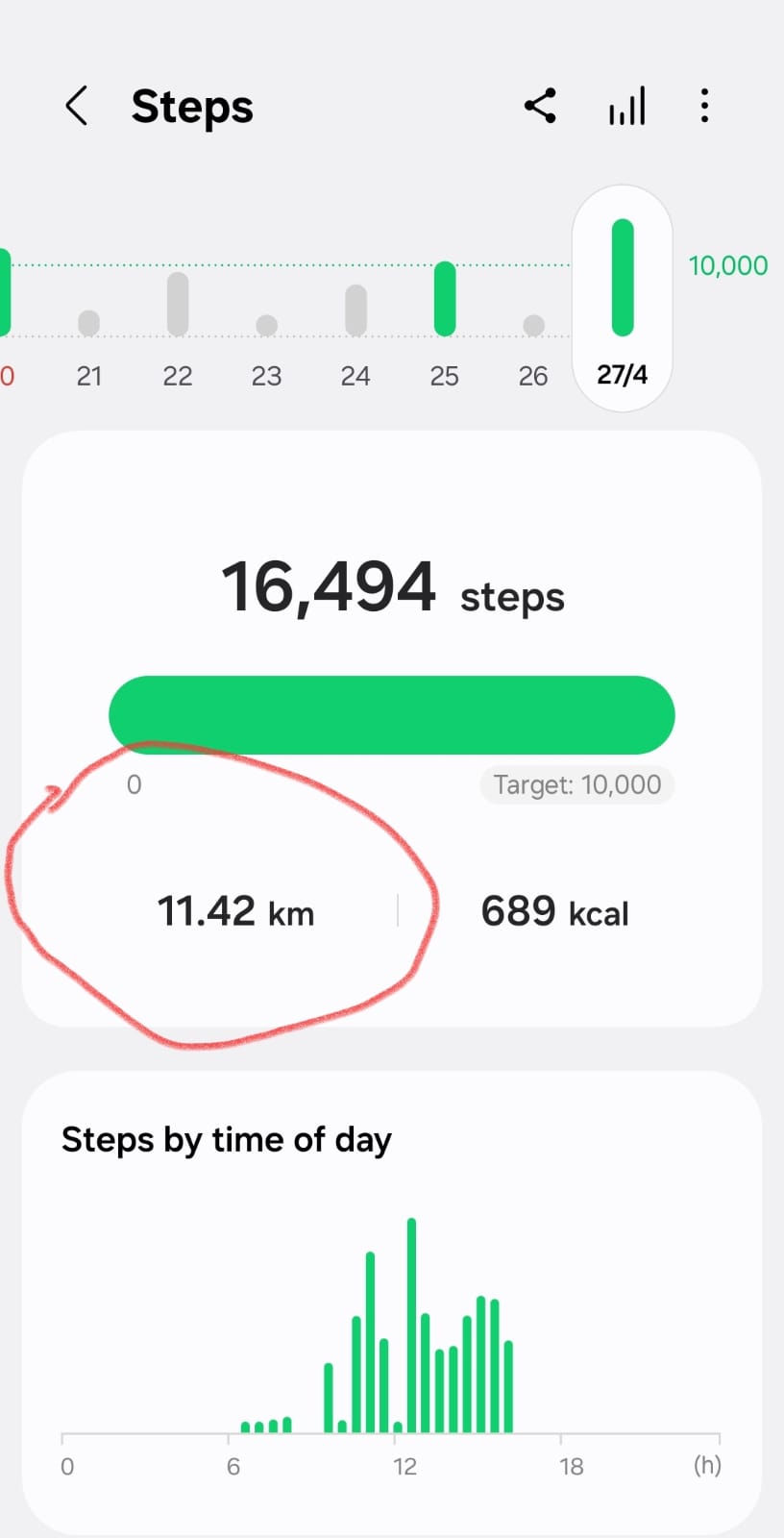
6 MILES
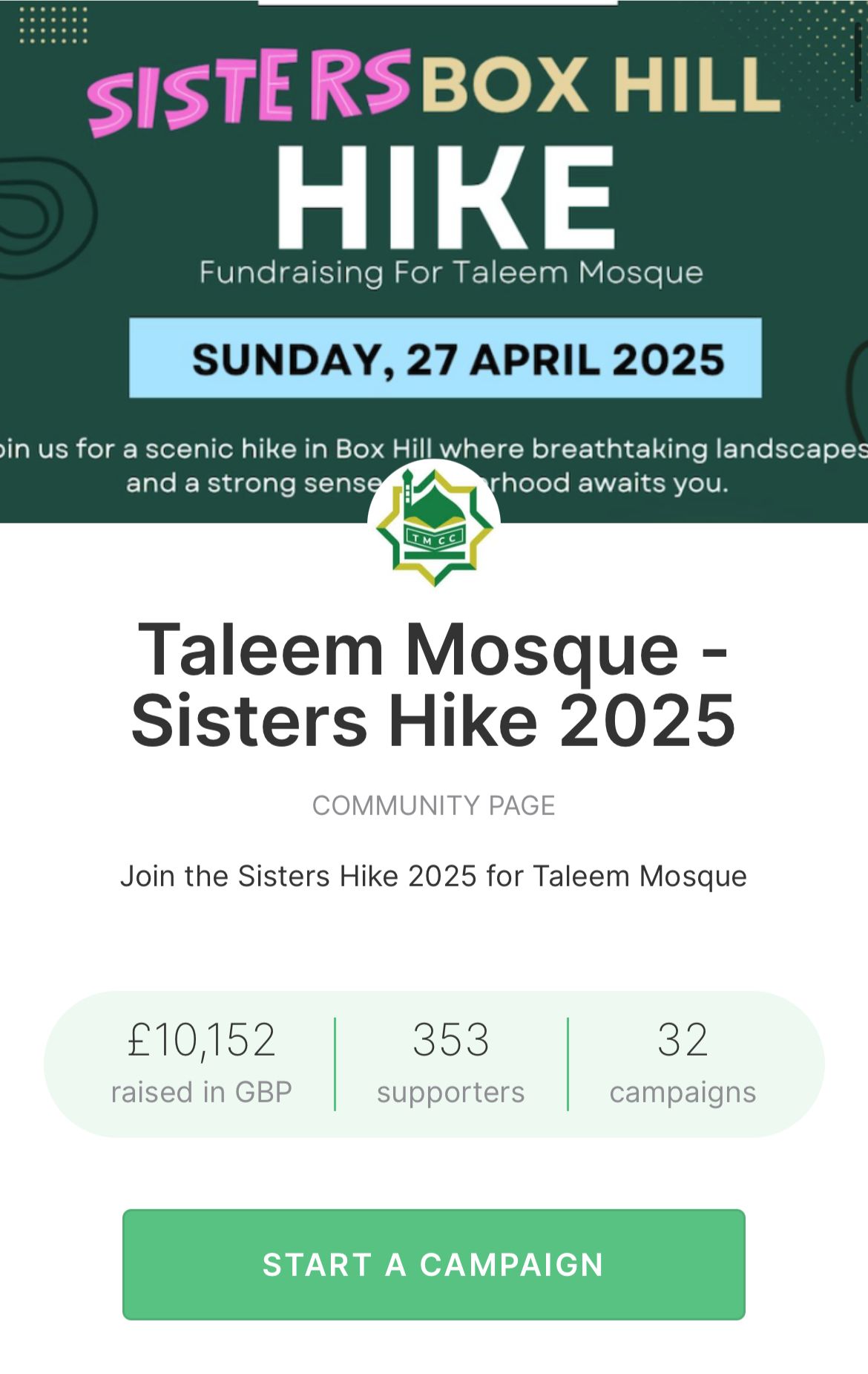
£10k+ funds raised for Taleem Masjid! MashAllah
Aged 18 to 50+
Diverse ethnic backgrounds
One ummah.
Alhamdulillah we made it.

The day began with Fajr salah. After breakfast, getting ready and packing our bags, we all met at Taleem Masjid before 8am. It was foggy.
After signing the register and getting our lunch packs, we boarded the coach, made duas and drove off. There was no going back…we hit the fast road. On the coach, some of us had a chat. Some of us fell asleep. And some of us were low-key panicking. The journey was smooth and we got there impressively soon, an hour and half or so.

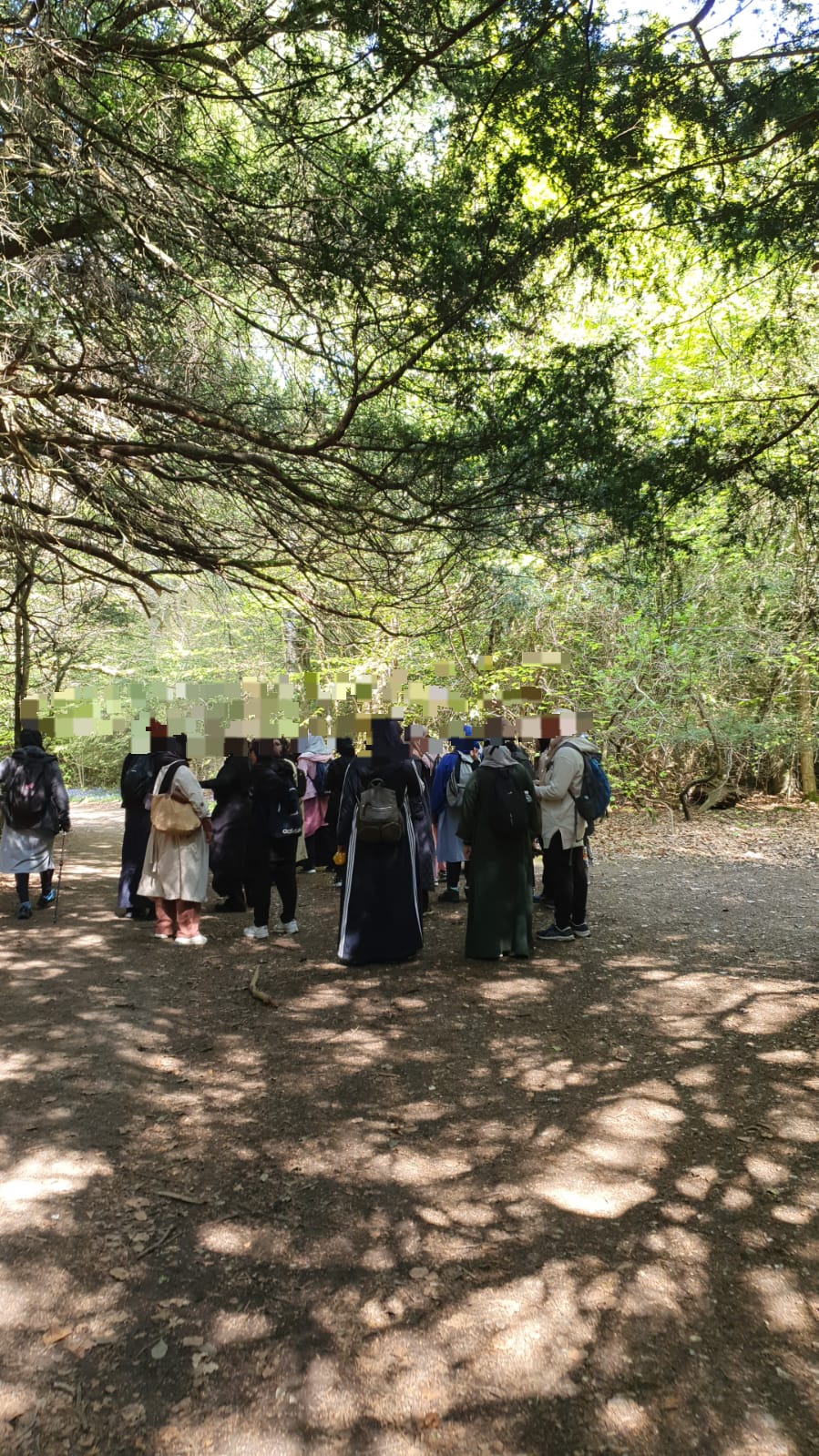
As soon as we arrived, the nerves died down and we were excited and ready for the mission. Our driver left us and we walked on. First stop was the cafe. Teas, coffees, toilets… you know the drill. Then we all stood in a uneven circle on the grass and introduced ourselves to each other. We barely remembered each other’s names, so we were assigned numbers instead. We slowly walked over to the viewpoint. At that moment, the selfie queens made themselves known. After the mandatory group photo, we began our hike. Bismillah.

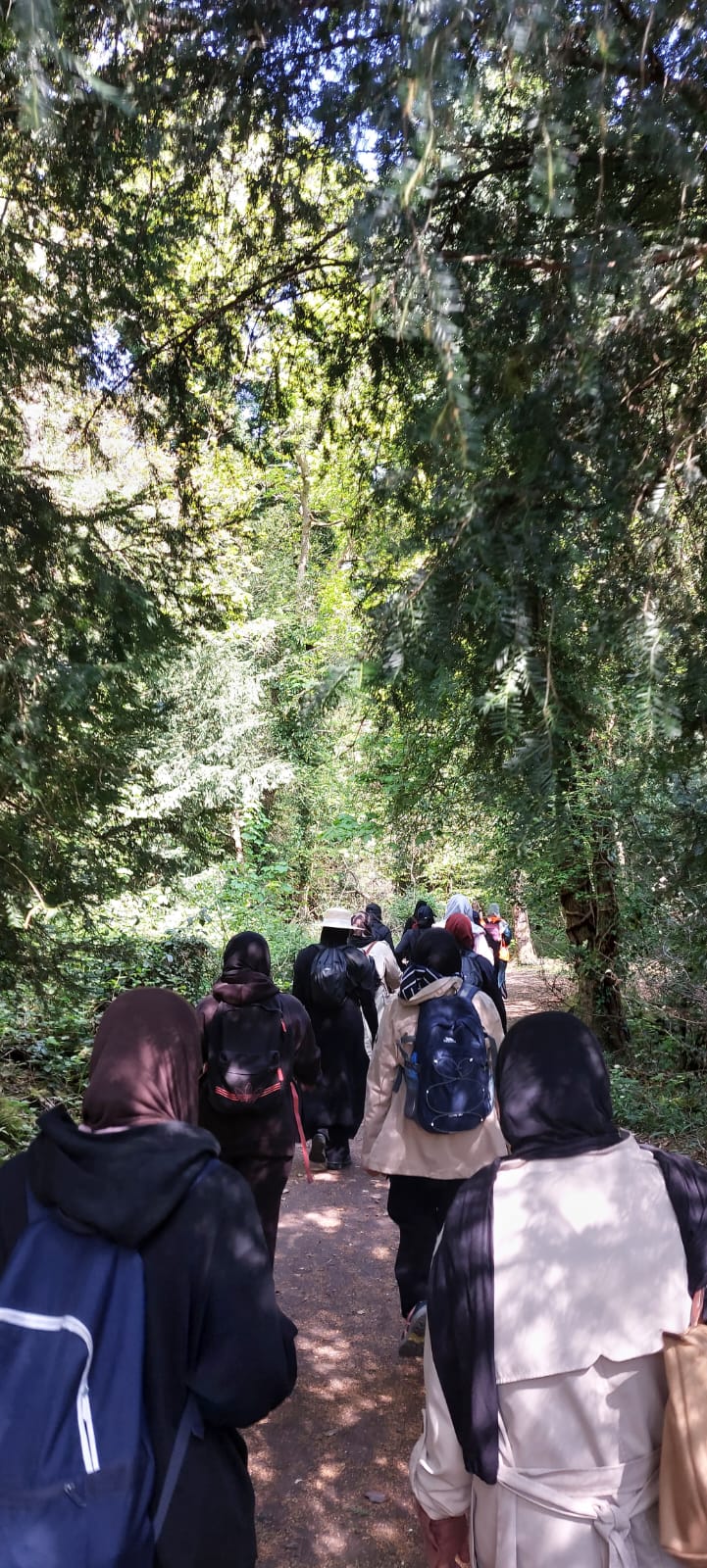
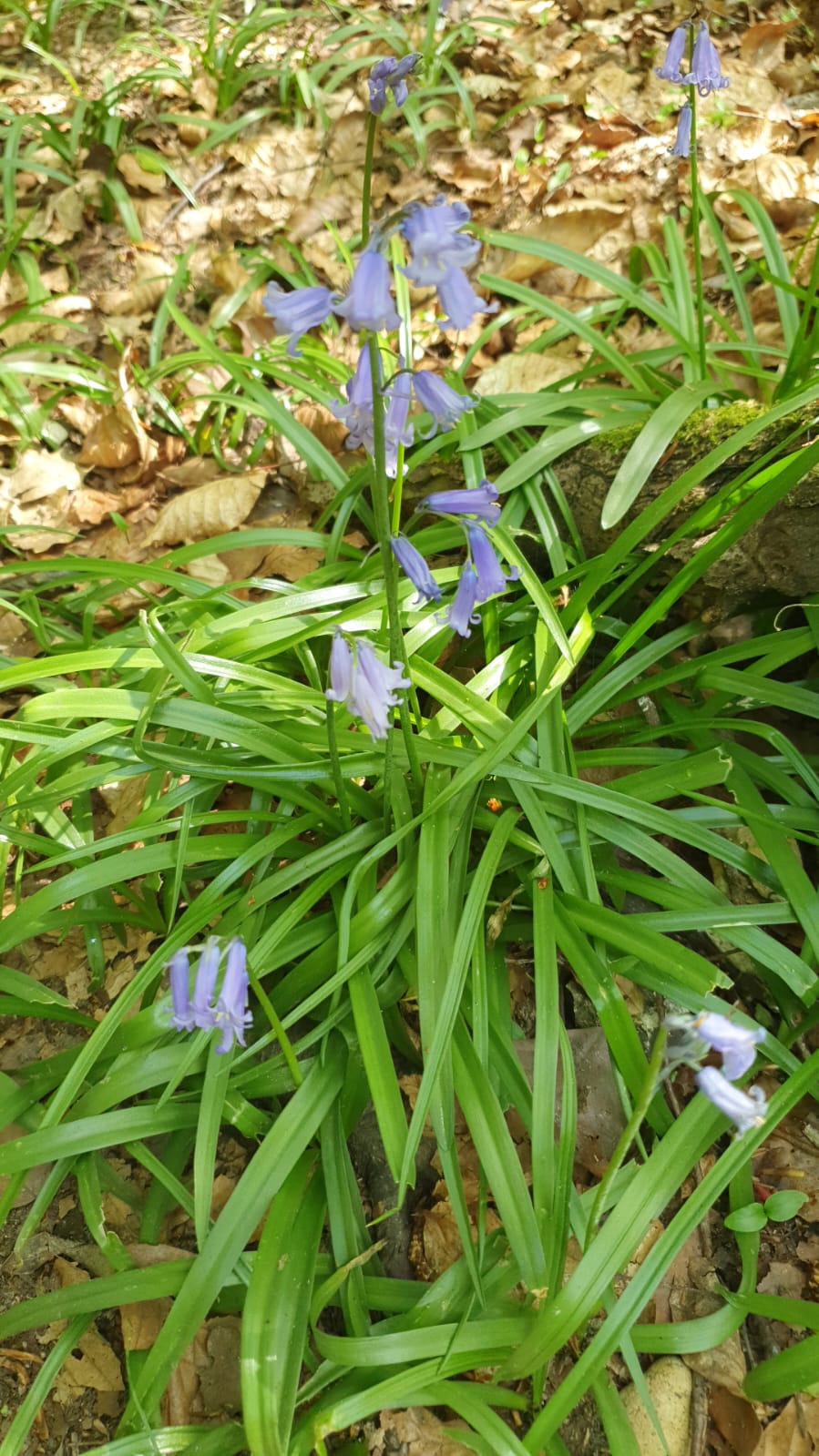
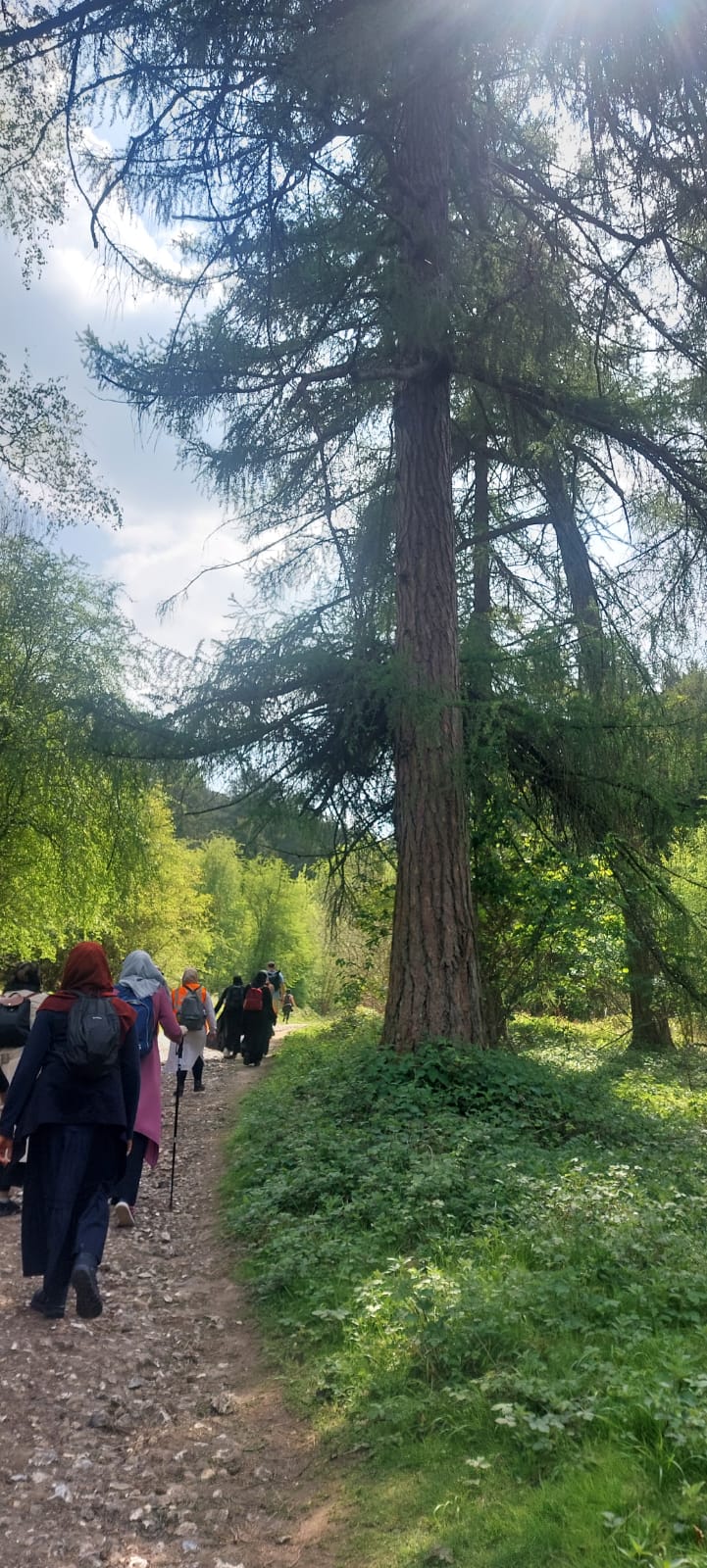
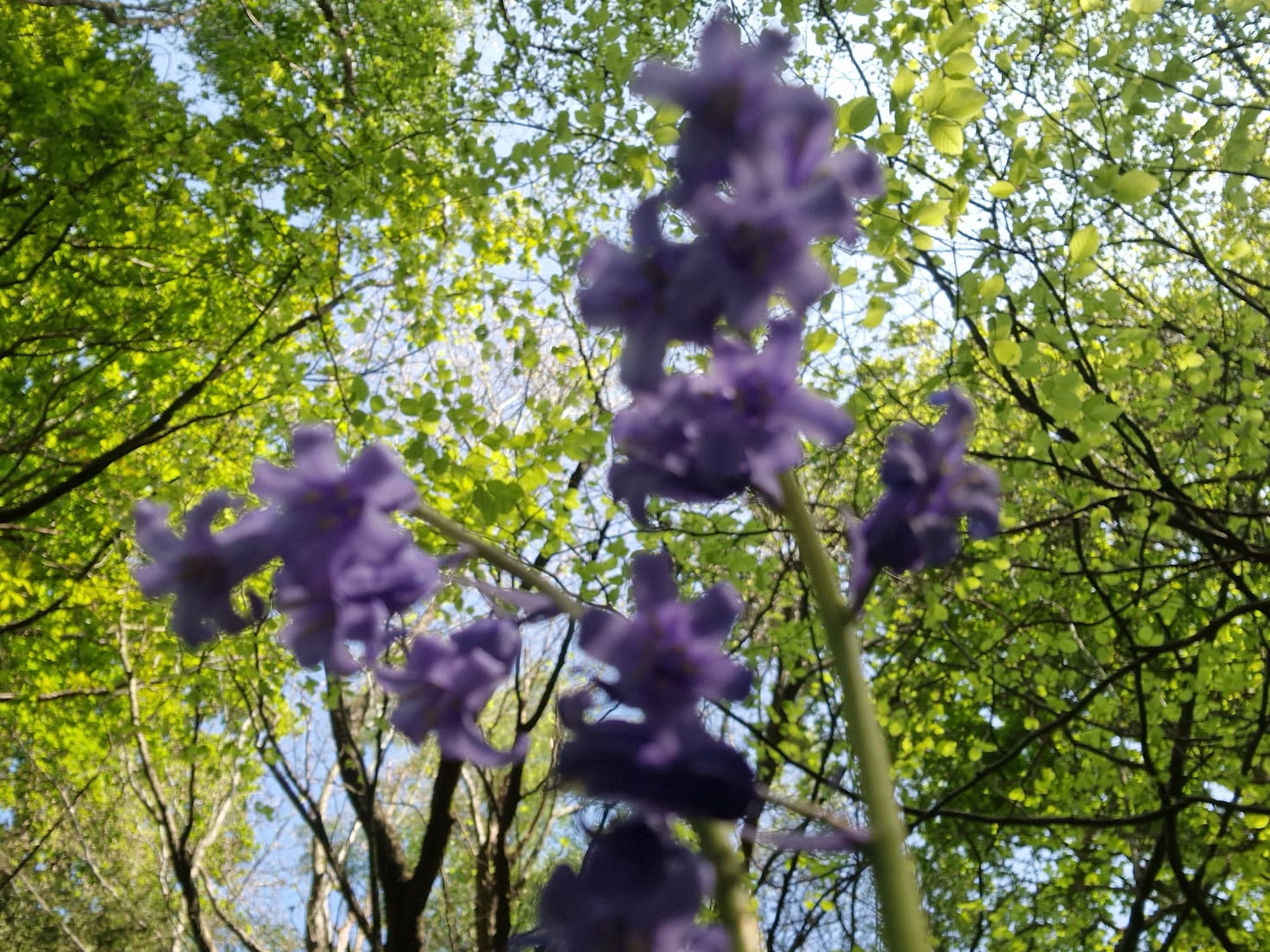
We walked and talked, made dua and dhikr, stopped to take pictures, pick flowers and bluebells. It was actually not that bad…save our heavy backpacks. We forgot about the weight and distance as we busied ourselves enjoying good company. Eventually we made it to the big green hill, where we stopped for lunch. Legend has it, the brothers stopped at the exact same place for lunch on their hike a few years back.
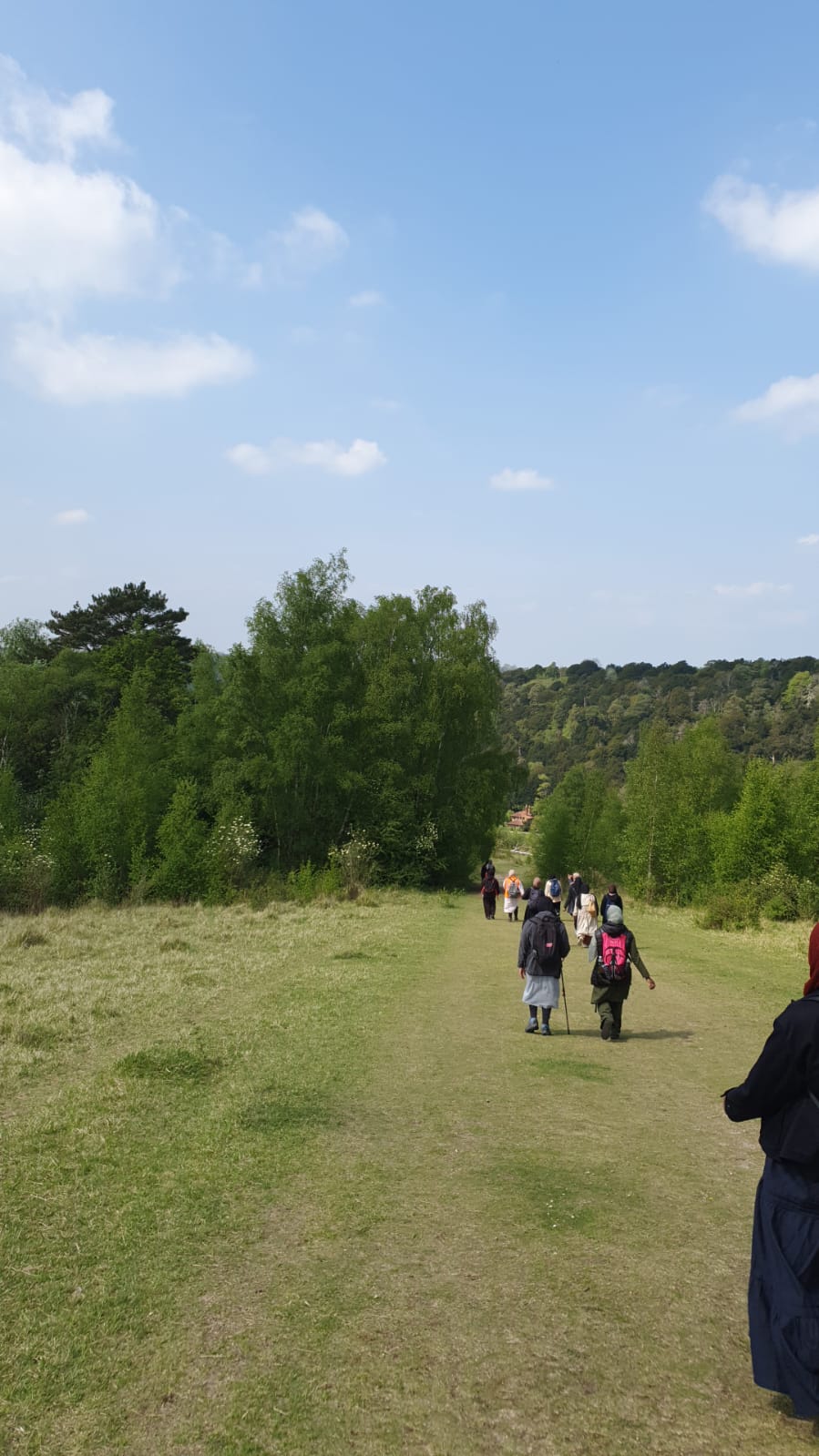
Thirty minutes later, we continued a long steep walk downhill. We stopped to capture the natural beauty in the woods, ginormous trees hundreds of years old. We were fascinated by the rows of bluebells. We watched the bumble bees who came to pollinate the colourful flowers. No doubt, Allah created these all for a purpose, so that we would know that He is The One and only who deserves to be worshipped. He is our Provider, Protector, Sustainer, The Eternal, Most-High, our Lord, The Most Merciful.
As we weaved between trees, treading through the leafy woods, we reflected on the life of Rasoolullah Muhammad peace be upon him. Recalling the battle of Badr in Ramadan 2AH, in the heat of the day, while fasting, the believers rushed to fulfill Allah’s command. The Muslims were an army of 300 or so, ill-equipped in weapons and cavalry. In contrast, the oppressive pagan Quraish army, topped more than 4x the Muslim army, well-equipped with a hundred horsemen and plentiful armed soldiers. Despite the military disadvantage, with firm faith in Allah the Muslims marched forward bravely, seeking to establish justice. Allah, Our Almighty Creator, supported the Muslims by sending thousands of angels who fought alongside them until they achieved success and victory.

In the next hour, we marched on, past the lake and finally found ourselves on the level green plains. We laid our mats down and prayed Zuhr. We were soaked in sweat, but satisfied. Alhamdulillah we made it. It was time for a break. The main hike was complete.
After the 4 mile hike, some of us seemed to have lost our marbles…and decided to hike another 2 miles down the steep stairs. We even jumped over the stepping stones in our abayas and dresses, trying hard not to fall into the water. And no, there weren’t any crocodiles, except the angry lady who got annoyed waiting for our large group to pass by.

When we eventually made our way back up the gruelling steep incline, we got ice-cream and water. The clock hit 4pm, and our driver came back to take us home. After boarding the coach, we made duas and tried our best to stay awake for the party. We got to the masjid in ample time, bid the driver farewell and made our way to the top floor for the ceremonial dinner after Asr prayer.
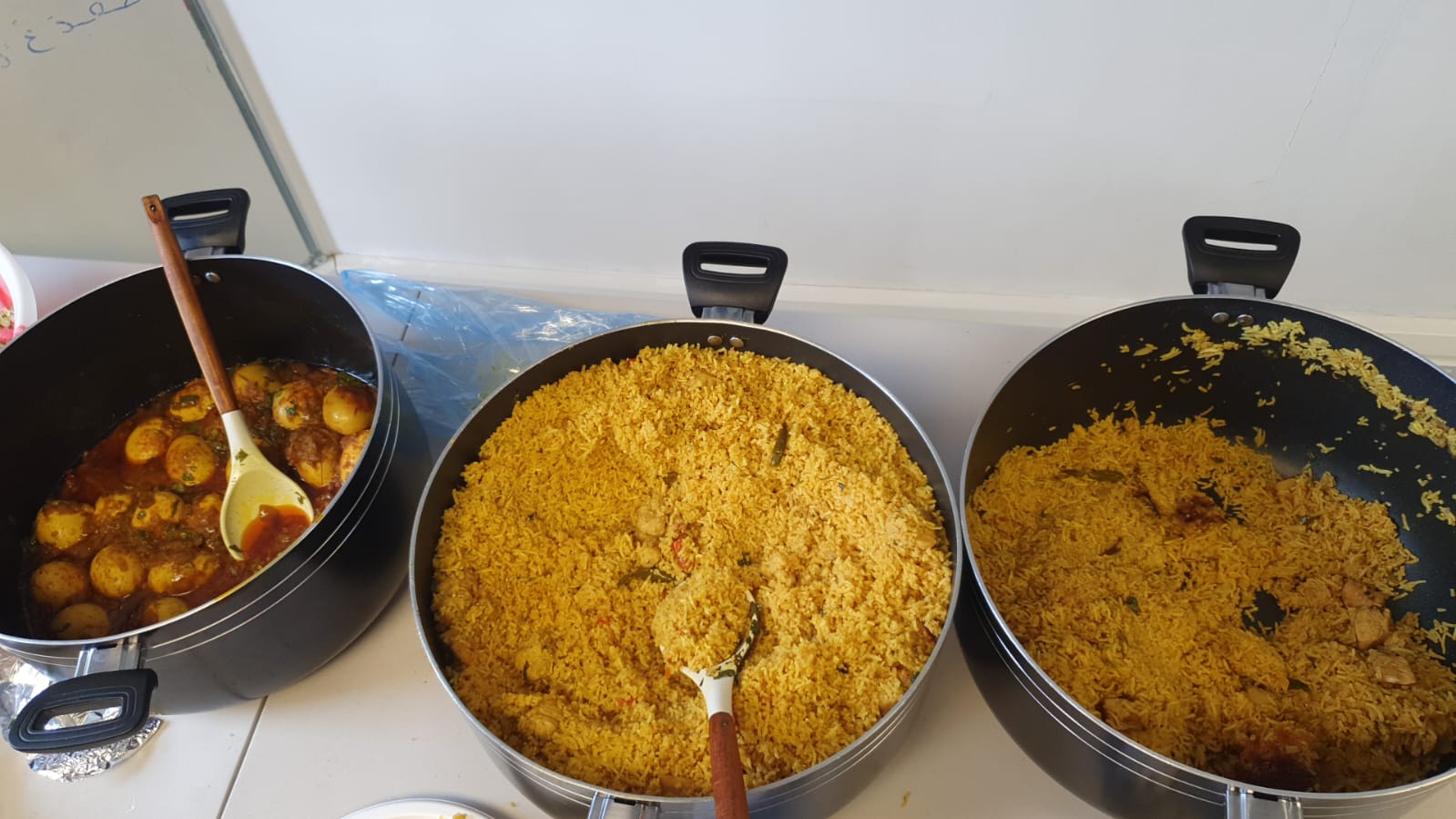
There was chicken biryani, spicy egg curry and tomato salsa salad. It was finally time to go home for a good bath and a long rest. Alhamdulillah.

Thanks to Taleem Masjid, brother Fraz, all the organisers and volunteers behind it, our lovely hikers, our families, our donors, the coach driver, the kind sister who cooked us a meal and of course, everyone who supported the cause!
Thank you for reading : )
Editor: NS
GALLERY- THE HIKE IN PICS


In the name of Allah.
THE SACRED MONTHS – Dhul Qi’dah 1446AH
Asalamu alaykum dear readers.
The sacred month of Dhul Qi’dah is due and we would like to remind ourselves about the importance of the four sacred months in Islam. Dhul Qi’dah is the 11th month of the Islamic calendar. The sacred months are Rajab, Dhul Qid’ah, Dhul Hijjah and Muharram, the 7th, 11th, 12th and 1st month of the Islamic Hijri calander respectively. (see Surah Tawbah, Qur’an chapter 9 verse 36). We should also prepare for the Hajj season, and endeavour to perform our obligatory Hajj for the sake of Allah, as soon as we have the means/ability.
(We should be extra careful not to sin, all the time, but particularly in the sacred months, and avoid aggression)
May Allah forgive us, be merciful to us and guide us, for He is the Most Gracious the Most Merciful, The Ever-Relenting. May Allah guide and forgive us and enable us to witness and observe many Hajj and Umrah in His obedience, with sincerity and strength and excellence. May Allah unite us in jannat al firdaus. Allah bless His final messenger Muhammad ibn Abdillah in abundance. Amin
Thurrock Muslims
Dhul Qi’dah 1446
share https://wp.me/p4GU3D-yt

TALEEM MASJID KIDS EID PARTY- QUIZ WINNERS
TALEEM MASJID held a KIDS EID PARTY to inspire, connect and educate the local Muslim children during spring break. It was a morning of games, fun, quizzes, food, snacks and sports.
The event highlight included Qur’an recitation by some young students of Taleem Masjid Madrasa
Check out the gallery!
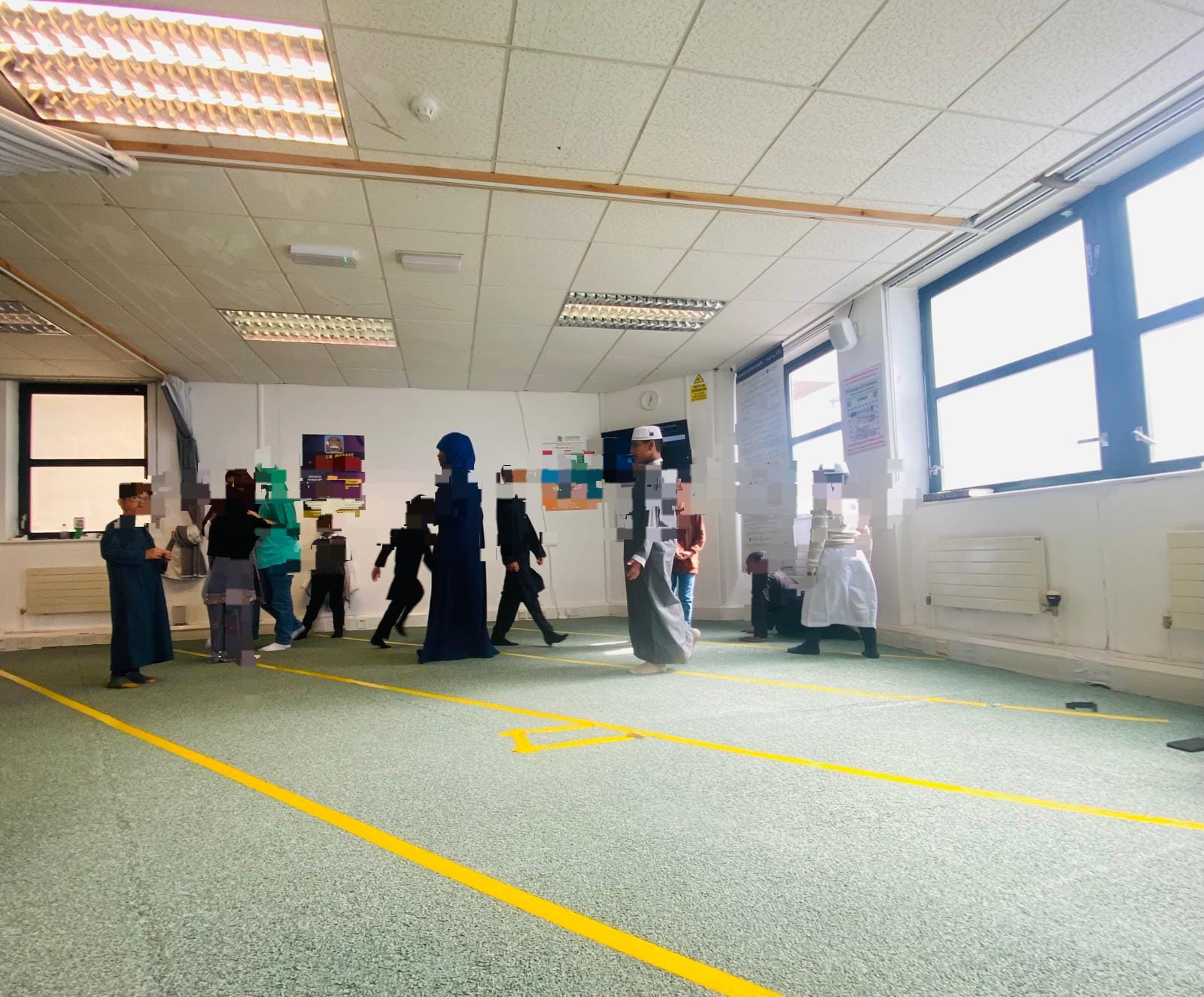
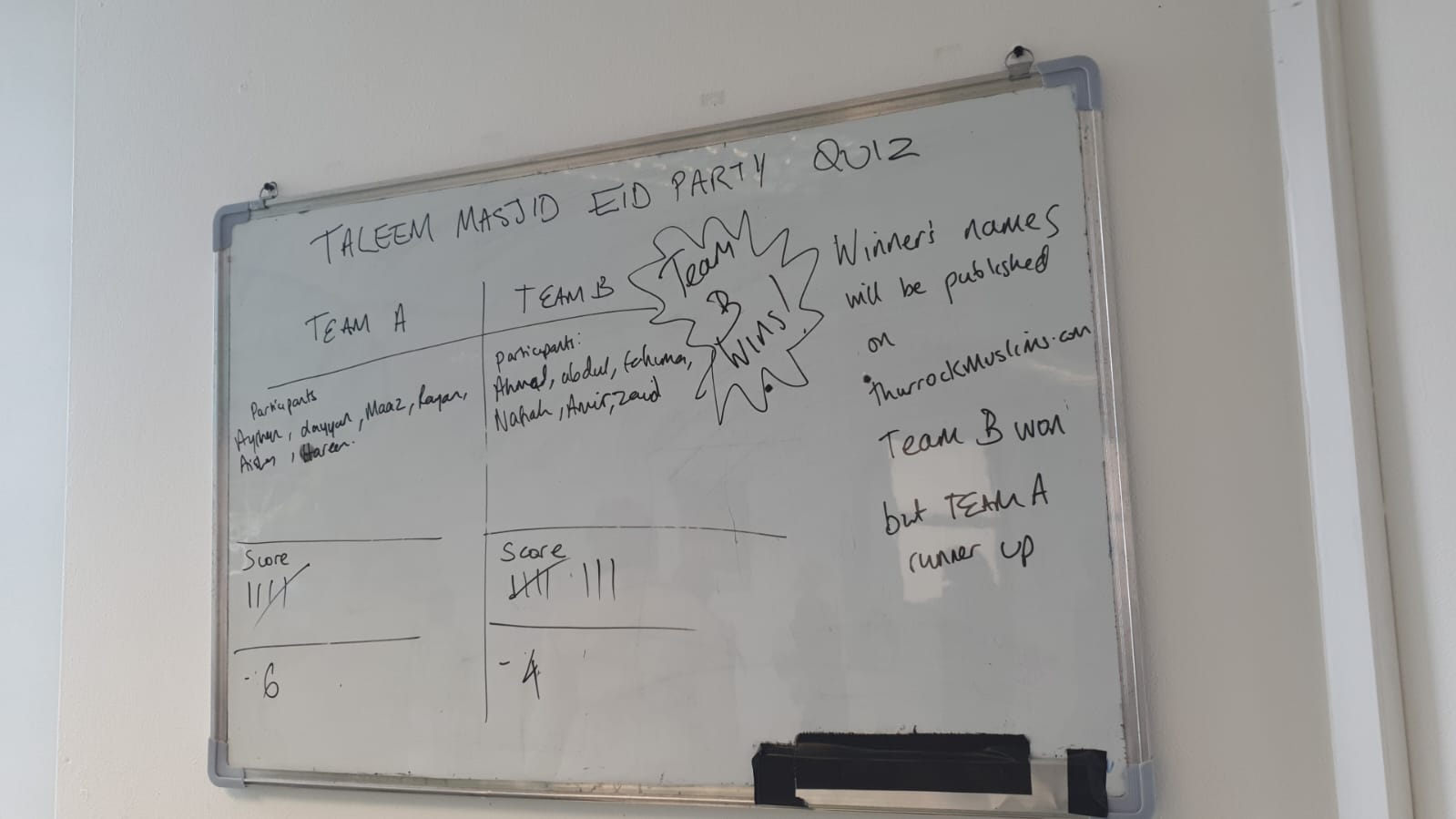
Quiz winners: TEAM B Ahmed, Abdul, Fahima, Nafiah, Amir, Zaid. Well done!
Team A runner up, thanks for playing!
Thanks for turning up and may Allah allow it to benefit us.

TALEEM MASJID WOMEN’S EVENT- QUIZ WINNERS
TALEEM MASJID held a women’s gathering, to inspire, connect and educate the local Muslim women. It was a night of socials, chill, pizza, biryani, cakes, tea, laughter, quizzes, and of course naseeha, dua, dhikr, salah in jamat and lots of smiles!
Check out the gallery!
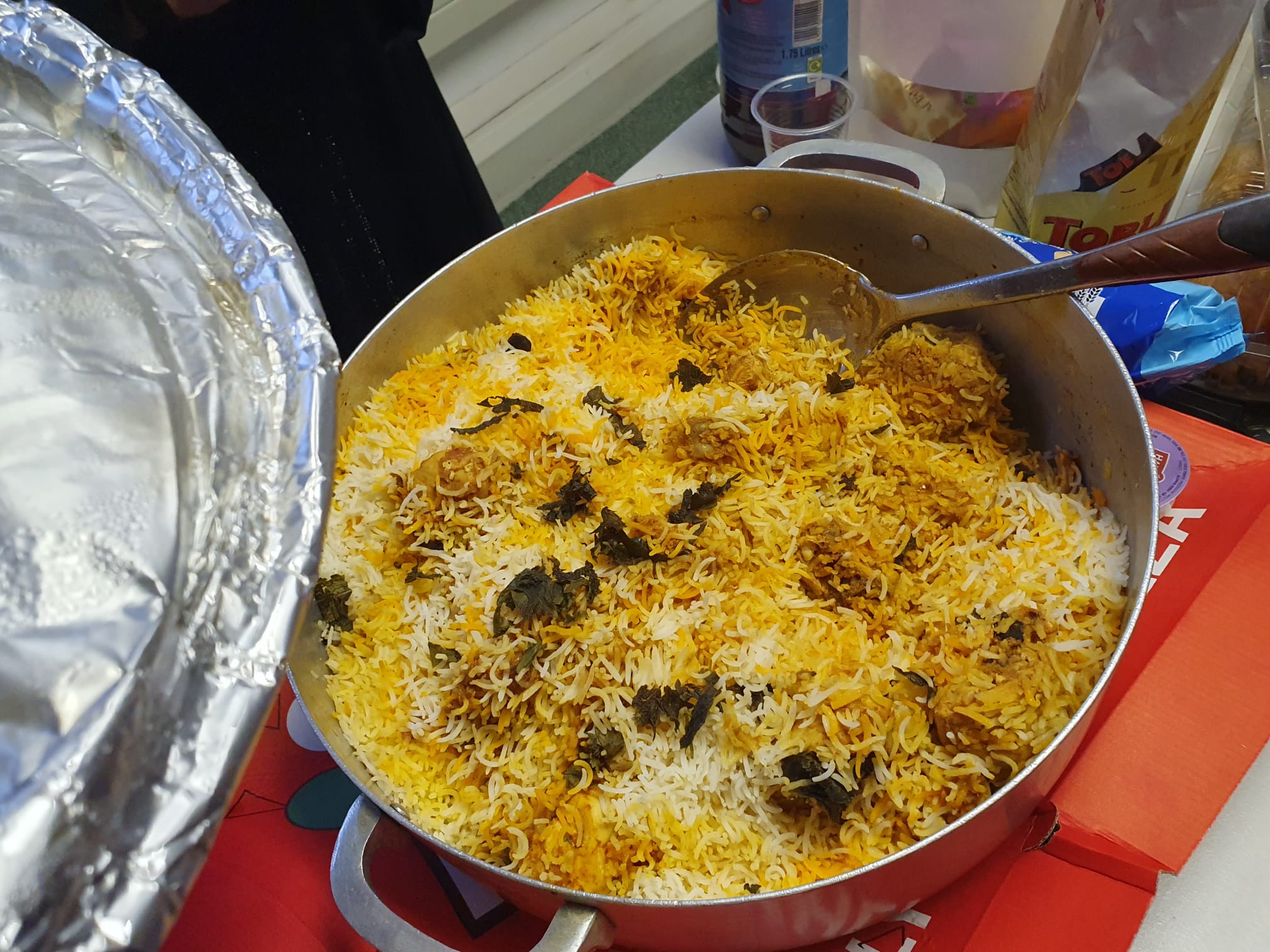
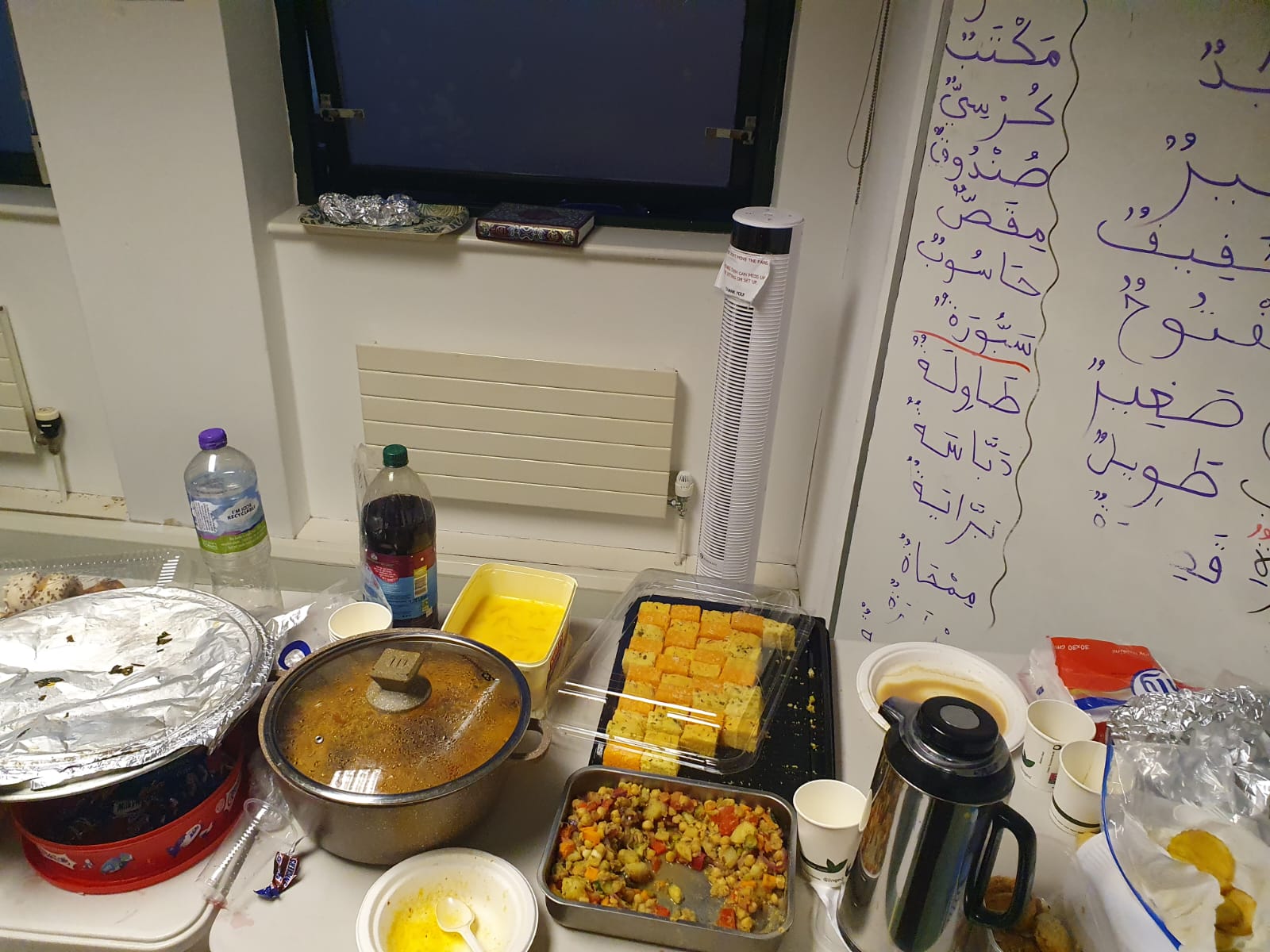
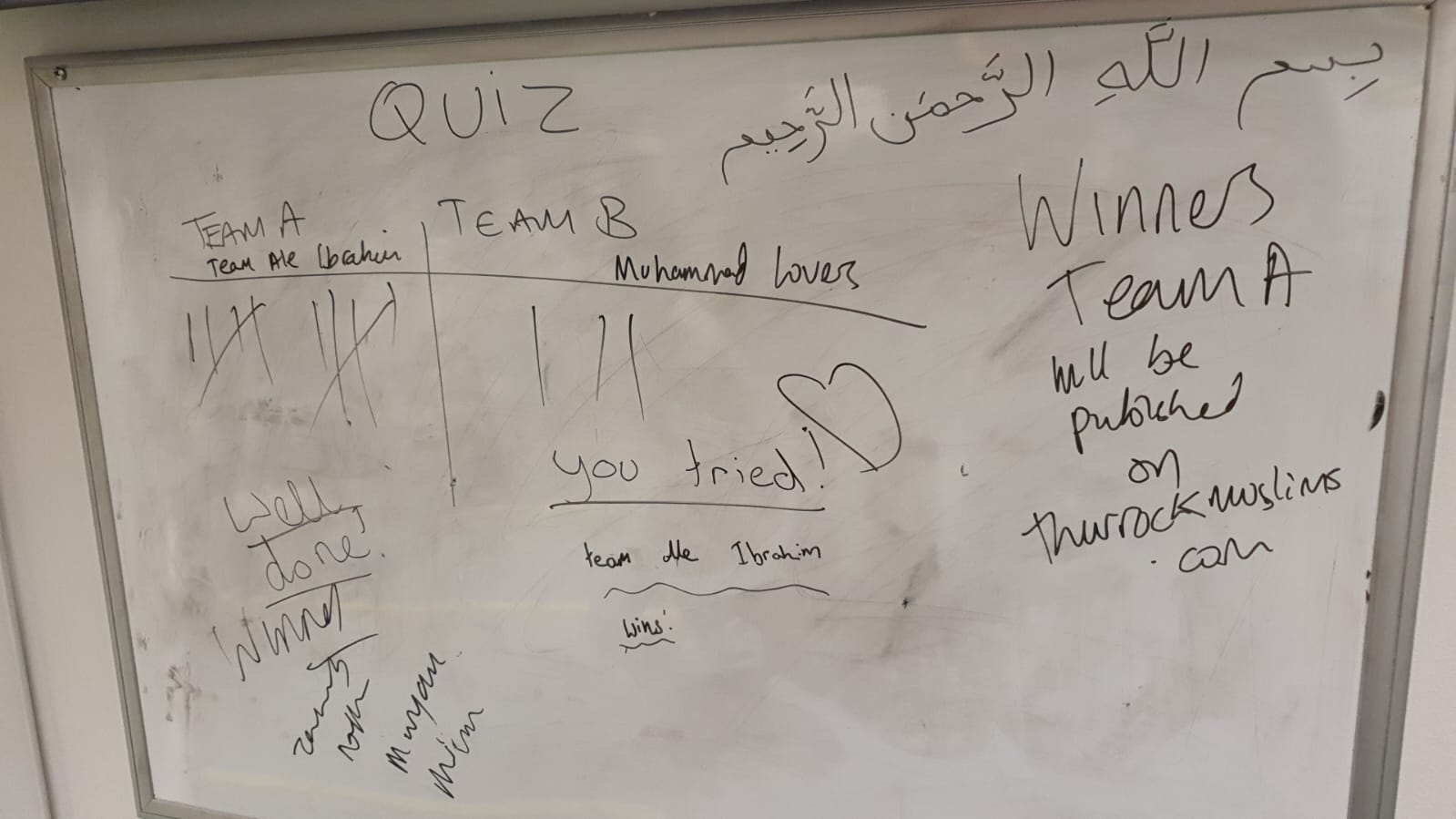
Quiz winners: Zainab, Nafiah, Jidatu Nafi, auntie Maryam. Well done!
Thanks for turning up and may Allah allow it to benefit us.
TALEEM MASJID WOMEN’S EVENT- FUNDAMENTALS OF A FANTASTIC FAMILY BY DR SIDRA NAEEM
Dr Lieutenant Ustadah Sidra Naeem shared her knowledge with us once again at Taleem Masjid. We’re were delighted to host her again. (Jan25)
Her speech on forming a fantastic Muslim family was very insightful.
Her top tips:
Main points to strengthen family bonds:
TIME
and
COMMUNICATION
and
FAITH INSTRUCTION
We should aim to :
Ensure our families are given quality time.
Try to communicate respectfully.
And we learn Islam well and practice and convey it to our families.
You can catch her speech on her channel for the full details.
(women only please 1 )
Thanks for turning up and may Allah allow it to benefit us.
 Thurrock Muslim Community